
Compressor Repair in Gastonia, NC

System Status Needs Attention

The Heart of Your AC. Properly Diagnosed.

When the compressor fails, warm air is just the beginning. Your outdoor unit may go silent, short-cycle, or run without cooling — and Gastonia's summer heat gives you little margin for delay. At Gastonia AC Repair, every compressor issue is diagnosed accurately before any work is recommended — so you understand exactly what failed, why it failed, and what restoring cooling performance involves.
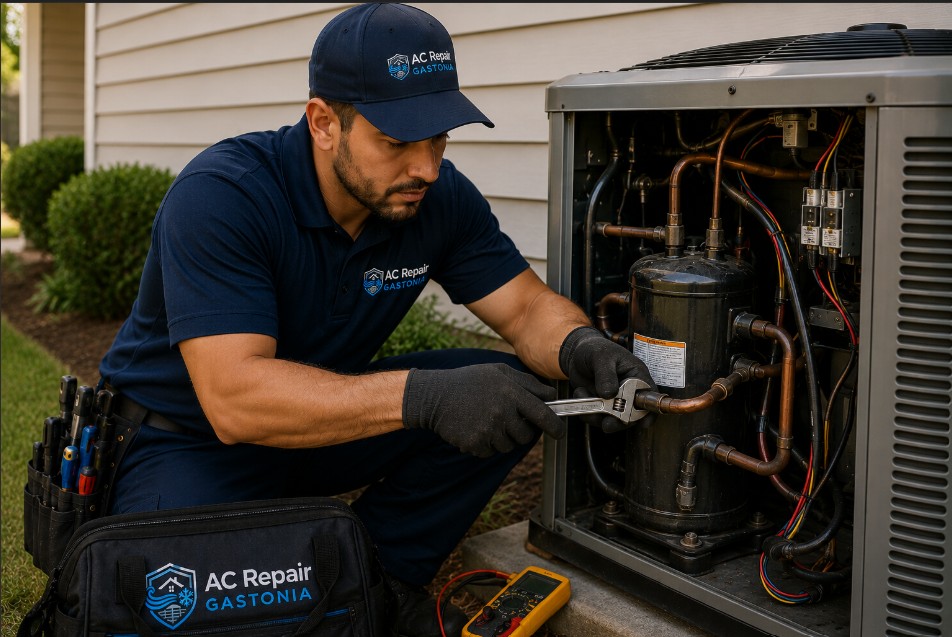
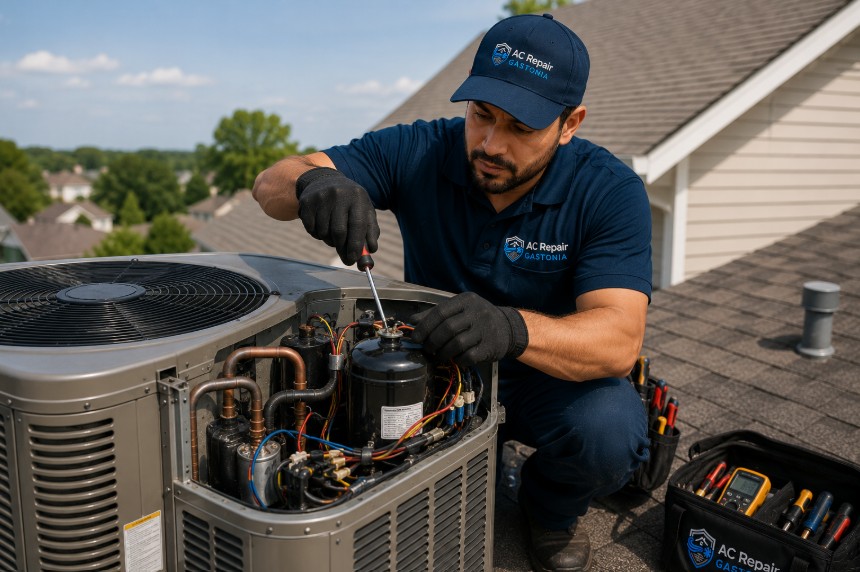
Outdoor Unit Diagnostics
NC Licensed & EPA Certified
Written Quote First
Gastonia Residential Service
4.9
Google
rating
98%
First-visit
completion
15+
Years in
Gastonia
Compressor Repair — Gastonia, NC

AC Compressor Not Working?

If you're looking for compressor repair in Gastonia, you're likely dealing with an air conditioner that no longer cools properly — or an outdoor unit that has stopped responding. At Gastonia AC Repair, we understand that a compressor problem is rarely just a single component failure — it usually has a contributing cause that needs to be found before any repair decision is made.

Whether your system is blowing warm air, the outdoor unit has gone quiet, or cooling performance has gradually declined over recent weeks, our technicians approach every call with a full system inspection. Most compressor repair in Gastonia homes is diagnosed on the first visit — and you receive a clear, written quote before any work begins.

At a Glance
Same-Day

Diagnosis available across Gaston County

Written Quote

Upfront — before any work starts

NC Licensed

Certified residential HVAC technicians

Compressor Repair — Gastonia, NC

Signs Your AC Compressor Needs Repair

These are the patterns homeowners notice most before calling Gastonia AC Repair for AC compressor diagnosis. Each sign points to a specific type of fault.

System Running — Air Is Warm

The fan runs, the thermostat responds, but warm or room-temperature air comes from the vents. When the compressor fails to build pressure, the refrigerant cycle stops and no heat transfer occurs — the system circulates air without conditioning it. AC blowing warm air in Gastonia is one of the most common compressor-related calls we receive.

Urgent — Compressor fault likely

Outdoor Unit Not Running

Indoor unit operates normally but the outdoor condenser unit stays silent — no fan, no compressor hum. The outdoor AC unit not working points to a compressor, capacitor, or contactor fault.

Critical — Same-day diagnosis

Humming But Not Starting

The outdoor unit hums when the thermostat calls for cooling but never fully starts. A failed start capacitor is the most common cause — it can't provide the jolt the compressor motor needs.

Urgent — Capacitor or motor fault

Breaker Trips When the AC Starts

The circuit breaker trips immediately or within minutes of the AC starting. A compressor drawing excessive current — due to mechanical failure, a grounded winding, or a seized motor — triggers the breaker as a protection response. Resetting the breaker repeatedly without addressing the cause accelerates damage and creates a safety risk.

Critical — Do not reset repeatedly

Unusual Sounds at Startup

Hard clicking, metal-on-metal grinding, or persistent rattling on startup indicates internal mechanical wear — a compressor attempting to start against excessive resistance.

Urgent — Internal wear signal

System Starts, Then Stops Briefly

Running for 2–5 minutes then shutting off before the room cools — the compressor's thermal protection is tripping because it cannot sustain normal operating conditions.

Urgent — Thermal overload

Cooling That Works, Then Doesn't

Mornings feel cool, afternoons don't — the system cools under lighter demand but fails as heat load increases. A compressor operating at reduced efficiency shows this pattern before failing completely.

Monitor — Declining efficiency

Recognizing the sign is the first step. Every fault above has a diagnosable root cause — and in most cases, Gastonia AC Repair identifies it on the first visit before any repair recommendation is made.

Compressor Repair — Gastonia, NC

What Causes AC Compressor Problems?

Every compressor failure has a contributing cause. Understanding what puts strain on the compressor is how Gastonia AC Repair approaches every AC compressor repair in Gastonia — so the repair addresses the source, not just the symptom.

Capacitor Failure

Compressor Impact High

The start capacitor delivers the electrical jolt the compressor motor needs to begin each cycle. A failing capacitor forces the compressor to attempt starting against reduced power — each hard start adds mechanical stress to the motor windings and internal components that accumulates over time.

Refrigerant Pressure Imbalance

Compressor Impact Critical

The compressor is designed to operate within a specific pressure range. A refrigerant leak that drops system pressure forces the compressor to work harder to move refrigerant through the circuit — running outside its design range accelerates wear on pistons, valves, and the motor itself.

Dirty Condenser Coils

Compressor Impact High

The condenser coil releases the heat the refrigerant absorbed from the home. When the coil is coated in dirt, grass clippings, or debris, heat cannot escape efficiently — the system's operating pressure rises and the compressor works at elevated temperatures for extended periods. In Gastonia's summer heat, this effect is magnified.

Restricted Indoor Airflow

Compressor Impact Medium

When the indoor air handler can't move enough air across the evaporator coil, the refrigerant doesn't absorb a full heat load. Suction pressure drops below design range, causing the compressor to operate inefficiently. Clogged filters and closed vents are common contributors in residential systems across Gaston County.

Electrical Supply Problems

Compressor Impact Critical

Voltage fluctuations, undersized wiring, or a weak electrical connection affect the compressor motor's ability to run at consistent torque. Repeated under-voltage or over-voltage events damage motor windings — one of the leading causes of compressor failure in older residential systems that haven't had electrical connections inspected in several seasons.

Overheating from Extended Cycles

Compressor Impact High

A system that runs continuously without reaching the thermostat's set point keeps the compressor under sustained load. Compressors are designed to cycle, not run indefinitely — prolonged operation raises internal temperatures and degrades the lubricating oil that protects internal moving parts. Gastonia's peak summer conditions are when this pattern causes the most damage.

Aging Internal Components

Compressor Impact Medium

Compressor pistons, valves, and bearings wear gradually over years of operation. A system that has run reliably for 10–12 years accumulates internal wear that reduces efficiency before it causes outright failure. Reduced cooling output in an older system is often the compressor signaling that it's approaching the end of its efficient operating range — not a sudden failure, but a gradual one.

Refrigerant Overcharge

Compressor Impact High

Adding too much refrigerant — often the result of a prior service that charged without confirming the system pressure — creates higher-than-normal head pressure that the compressor must work against on every cycle. Overcharged systems often show the same symptoms as undercharged ones, which is why pressure testing is essential before any recharge.

Gastonia AC Repair identifies the contributing cause behind every compressor problem before recommending repair or replacement. Understanding the cause is what separates a repair that lasts from one that returns as a problem within a season. For homes with central AC systems, the same diagnostic standard applies across every component.

Compressor Repair — Gastonia, NC

Our Compressor Repair Process

Every compressor repair in Gastonia starts the same way: a structured diagnostic that evaluates the full system before any repair recommendation is made. Gastonia AC Repair follows a defined process so nothing is guessed and nothing is missed.

Cooling Performance Review

The diagnostic begins before a single panel is removed. The technician evaluates how the system is performing against what it should be delivering — supply air temperature, runtime patterns, and whether the home is reaching set point. This gives context that shapes every step that follows.

Outdoor Unit Inspection

The condenser unit is inspected for physical condition: coil cleanliness, fan operation, debris clearance, and signs of overheating or prior damage. A dirty or restricted condenser directly affects compressor operating pressure — identifying this early separates a compressor issue from a maintenance issue.

Compressor Startup Behavior

The way a compressor starts reveals a great deal about its internal condition. The technician listens for hard-start symptoms, hesitation, or repeated trip-and-reset cycles. A compressor that struggles to start or trips on overload is communicating mechanical or electrical stress that needs to be traced to its source before any repair proceeds.

Airflow Verification

Restricted indoor airflow is one of the quieter contributors to compressor strain. The technician checks that the indoor air handler is moving adequate volume across the evaporator coil. Low airflow causes suction pressure to drop below design range, which puts the compressor in a sustained overworked state — a condition that mimics mechanical failure but has a simpler cause.

Electrical Component Testing

The capacitor, contactor, and electrical connections are tested directly. Capacitor readings are compared against rated specifications — a failing capacitor won't always cause an immediate shutdown; it often just makes the compressor work harder on every startup cycle. Wiring condition and connection integrity are also checked at this stage, since voltage irregularities are among the leading causes of compressor motor damage.

Refrigerant System Pressure Check

System pressures are measured on both the high and low sides to determine whether the refrigerant charge is within the manufacturer's specified operating range. Both undercharge and overcharge put abnormal load on the compressor — neither can be identified without accurate pressure readings. If a leak is suspected, the technician checks for refrigerant leak points before any recharge is considered.

Compressor Strain & Overheating Indicators

Compressor surface temperature, amp draw under load, and internal overload trip history are reviewed. Running amperage that exceeds the rated load range is a reliable indicator that the compressor is working outside its design envelope. High amp draw combined with low cooling output narrows the diagnosis significantly — pointing toward internal mechanical wear rather than an external system problem.

Repair Pathway Determination

Once both phases of the diagnostic are complete, the technician has an accurate picture of the system and the compressor's actual condition. The homeowner receives a clear explanation of what was found, which components are confirmed at fault, and what the realistic repair options are. No recommendation is made until the full diagnostic supports it — this is how Gastonia AC Repair approaches every AC compressor repair in Gastonia.

Gastonia AC Repair applies the same structured diagnostic standard to every compressor repair near Gastonia — whether the system is a newer two-stage unit or an older central AC system that's been running for years. The process doesn't change based on system age. The goal is always the same: a repair built on an accurate diagnosis.

Compressor Repair — Gastonia, NC

Why Homeowners Choose Gastonia AC Repair

Residential AC compressor repair in Gastonia done the way it should be — diagnosed carefully, explained clearly, repaired to last.

Most homeowners dealing with a compressor problem have never had to think about how their AC system works before. Gastonia AC Repair treats that reality with respect. Every diagnostic finding is communicated in plain terms, and every repair recommendation comes with a clear explanation of what was found and why it matters — not just a number on a work order.

Residential cooling systems in Gaston County run hard through long, humid summers. The compressor carries the heaviest load of any component in the system. When it begins to show strain, the response it receives in the first service call shapes whether it continues to run reliably or becomes a recurring problem. That first call is where Gastonia AC Repair focuses. Not just on the repair, but on making sure the underlying cause is understood — so the same problem doesn't return after the next heat event.
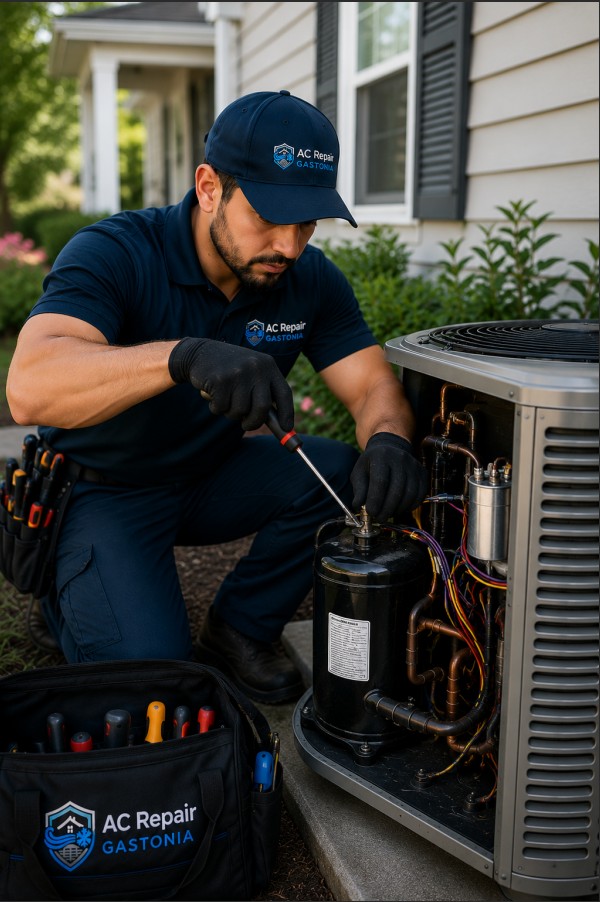
why homeowner choose ac repair gastonia

Diagnosis Before Recommendation

No repair or replacement is recommended until the full diagnostic is complete. Homeowners receive a finding, not just an invoice — so every decision is informed.

Residential-Focused Experience

Gastonia AC Repair works specifically with residential cooling systems — the brands, configurations, and age ranges common to homes in Gaston County. Familiarity with how residential systems age and behave makes for more accurate diagnostics.

Organized, Methodical Service

The same structured approach is used on every AC compressor repair in Gastonia — regardless of system brand, age, or configuration. A consistent process means fewer overlooked contributing factors and more durable outcomes.

Long-Term Performance in Mind

A repair that addresses only the immediate failure often returns as a problem within a season. Gastonia AC Repair evaluates the full system context so repairs are built on what the compressor actually needs — not just what failed last.

Homeowners searching for compressor repair near Gastonia deserve a service experience that starts with honest evaluation and ends with a repair they can trust — that's the standard Gastonia AC Repair holds itself to on every call.

Compressor Repair — Gastonia, NC

Compressor Repair FAQs

Common questions homeowners ask about AC compressor problems, what causes them, and when to call for a repair evaluation.

The most common causes are a failed start capacitor, a tripped high-pressure limit, or a weak electrical connection at the contactor. The capacitor is often the first component to go — when it degrades, the compressor motor doesn't receive the electrical jolt it needs to start each cycle and simply won't engage. A compressor that hums briefly and then shuts off is almost always dealing with a capacitor or startup electrical issue rather than a mechanical failure.
Yes — and in many residential cases, it can. Whether repair is the right path depends on what caused the problem. If the compressor itself is mechanically sound but failed due to a bad capacitor, electrical fault, or refrigerant imbalance, addressing those contributing causes often restores full operation. True internal compressor failure — seized motor windings, broken valves — is a different matter and typically warrants a replacement conversation. That determination requires an accurate diagnostic first, which is why Gastonia AC Repair evaluates the full system before recommending either direction.
Not necessarily. When the outdoor unit runs but cooling is absent or severely reduced, the most likely culprits are low refrigerant charge, dirty condenser coils, or a compressor that's running but not pumping effectively. The condenser fan spinning does not confirm the compressor is working — the fan motor and compressor operate independently. A pressure test is the reliable way to determine whether the compressor is moving refrigerant through the circuit or simply running without doing meaningful work.
Yes — and this is one of the more serious ways deferred maintenance compounds into a larger problem. Refrigerant carries lubrication oil through the system as it circulates. When charge drops significantly, the compressor runs with reduced lubrication, which accelerates wear on internal moving parts. Extended operation in this state can turn a refrigerant leak — which is a repairable problem — into compressor damage that's far more involved. Catching a leak early is considerably less disruptive than addressing its downstream effects.
Overheating compressors typically show a recognizable pattern: the system runs, shuts off before reaching the set point, sits idle for 15–30 minutes, then restarts — only to repeat the cycle. This is the thermal overload protection doing its job, cutting power when internal temperatures climb too high. Other indicators include the outdoor unit running longer than normal before shutting down and reduced cooling output during the hottest part of the day. These patterns warrant a diagnostic call rather than continued operation, since repeated thermal shutdowns accelerate internal wear.
A breaker that trips at startup — rather than during operation — is almost always responding to a current spike the compressor is drawing as it attempts to start. A healthy compressor with a functional capacitor starts cleanly; a compressor struggling against a weak capacitor, tight windings, or internal mechanical resistance draws far more current in those first seconds. When that spike exceeds what the breaker is rated for, it trips. Resetting the breaker and running the system again without addressing the cause typically results in the same failure — and increases the risk of winding damage over time.
The honest answer is: it depends on what the diagnostic finds. For systems under 10 years old where the compressor failure traces back to a specific fixable cause — electrical, refrigerant, or a failed component — repair is often the more sensible path. For older systems with significant accumulated wear, or where the compressor has failed internally without a clear external cause, replacement may be the better long-term value. What matters most is getting an accurate read on the system's actual condition before committing to either option. That's the evaluation Gastonia AC Repair is built around — not a default recommendation in either direction.
Gastonia AC Repair

Schedule Compressor Repair
in Gastonia

If your AC system isn't cooling the way it should, Gastonia AC Repair can evaluate the compressor and the full system — clearly, thoroughly, and without the guesswork.

Scroll to Top