
AC Maintenance in Gastonia, NC
Gaston County summers are not gentle on air conditioning equipment. From late May through September, your system runs longer, pulls harder against humidity, and accumulates a season's worth of coil grime, drain buildup, and electrical wear — all without giving you any obvious warning until something quits.
Dynasty Heating and Cooling provides thorough annual AC maintenance for Gastonia homeowners. One visit in spring catches what fails in July: low refrigerant, a capacitor on its way out, a condensate drain that's almost clogged. Schedule it before the heat arrives and you won't be calling for emergency service when you need the system most.
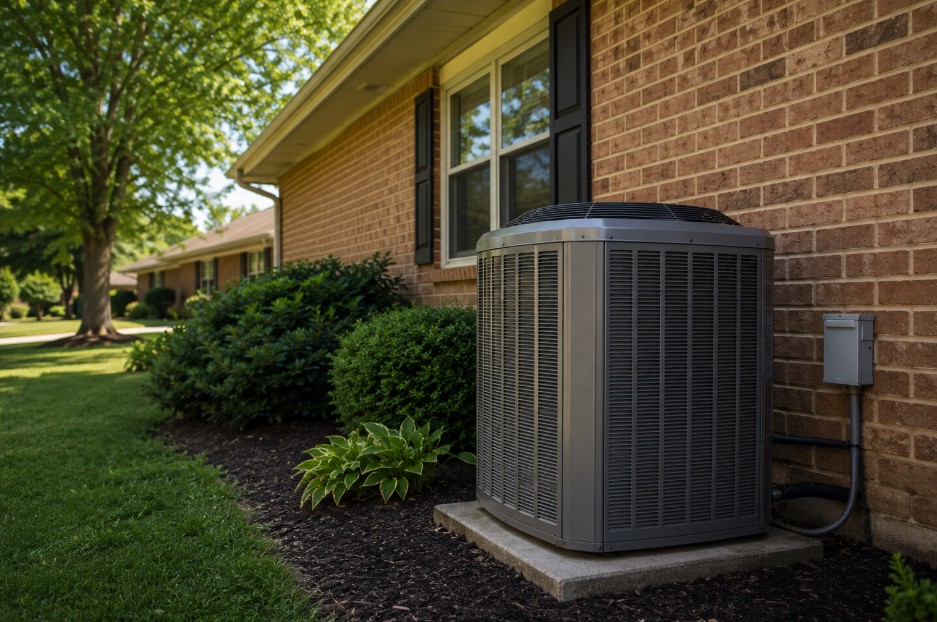
Why Gastonia's Climate Is Harder on AC Equipment Than Most
Three things work against your air conditioner in Gaston County that don't apply in most of the country: sustained summer humidity, older housing stock, and spring pollen that's among the highest in the Piedmont region.
Relative humidity in Gastonia sits above 70% through most of the cooling season. That's not just uncomfortable — it means your AC is running a dehumidification job on top of a cooling job, every single hour it operates. Evaporator coils and drain pans take the worst of that load. Without a proper cleaning before summer, the coil's heat-exchange capacity drops, the drain pan grows algae, and by late June the system is working significantly harder than it was designed to.
The pollen load here is the other factor that competitors don't talk about. The Piedmont region's spring pollen season — oak, pine, grass — loads condenser fins and blower wheels in ways that a typical Midwest or Pacific climate doesn't see. A tune-up in March or April clears all of that before it has three months to bake on. And in Gastonia's older neighborhoods — most of the residential housing stock from the 1970s through early 2000s — duct connections that have loosened over decades let attic air bleed in, making the compressor run longer cycles to compensate. We check for that too.
Avg. relative humidity in Gastonia, May–Sept
Above-average humidity means your AC is dehumidifying constantly alongside cooling — accelerating wear on coils, drain pans, and blower components.
More pollen per year in NC Piedmont vs. national avg
Condenser fin clogging from pollen is one of the top reasons Gaston County systems lose efficiency before summer peaks.
Avg. emergency repair vs. $89–$149 for a tune-up
The majority of emergency summer calls in Gastonia trace back to a deferred maintenance problem — one that would have been caught and fixed in spring.
What AC Maintenance Actually Covers — Every Visit
A tune-up is not a filter swap and a visual walk-around. Every visit works through a structured checklist that takes a licensed technician 60 to 90 minutes to complete properly. Here's what that covers.
Electrical & Controls
- ✓ Thermostat accuracy test and calibration
- ✓ Inspect and tighten all electrical connections
- ✓ Capacitor amp draw test (start capacitor and run capacitor)
- ✓ Contactor inspection — test for pitting, arcing, or contact wear
- ✓ Breaker and disconnect check for correct amperage
Refrigerant & Coils
- ✓ Suction and discharge pressure measurement
- ✓ Refrigerant line inspection — insulation, wear, and routing
- ✓ Evaporator coil cleaning (indoor air handler)
- ✓ Condenser coil cleaning (outdoor unit)
- ✓ Refrigerant leak check — written note in findings report if pressures are off
Airflow & Drainage
- ✓ Condensate drain line flush and clearing
- ✓ Drain pan inspection for algae growth, rust, or cracking
- ✓ Air filter check or replacement (standard 1" filter included)
- ✓ Blower wheel and motor condition check
- ✓ Supply and return air temperature differential measurement
- ✓ Accessible duct connections checked for gaps or separation
System Performance & Safety
- ✓ Compressor amp draw under load
- ✓ Outdoor unit inspection — debris clearance, level mount, pad condition
- ✓ Safety switch and emergency shutoff test
- ✓ Lubrication of moving parts where applicable
- ✓ Full system run test — confirm operating temperature delta is within spec
- ✓ Written findings summary provided before the visit ends
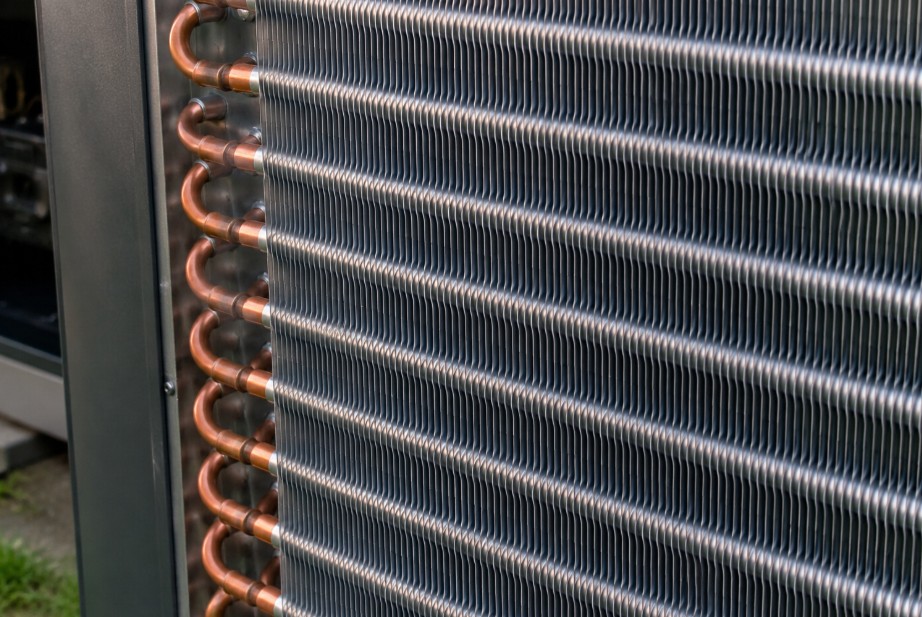
Why the Electrical Check Matters Most
Most mid-summer AC failures in Gastonia start with one of two components: a capacitor or a contactor. A capacitor doesn't announce when it's failing — it just makes the compressor strain a little harder at startup, draws extra current, and eventually refuses to fire on the hottest afternoon of the year. Testing it during a spring tune-up costs nothing. Replacing it at that point runs about $85–$120. Replacing a compressor that failed because the capacitor was never caught runs $1,200–$2,400.
That's the real argument for annual maintenance: not that your system "needs a cleaning," but that two or three specific components have predictable failure signatures that a technician can measure. We measure them. You get the numbers in writing.
Signs Your AC Needs a Tune-Up
Not an Emergency Repair
These aren't breakdown signs. They're the early signals that show up 4–8 weeks before a system fails — and every one of them is cheaper to address during a scheduled tune-up than after the unit stops running.
Your electricity bill is higher than it was this time last year
If your usage habits haven't changed but your bill has crept up 10–20% over the same billing period last year, your AC is working harder to produce the same result. That's usually a dirty coil or low refrigerant — both caught and corrected during a tune-up.
The air out of your vents feels cool — but the house takes forever to get there
When a system is running long cycles without reaching setpoint, the cooling capacity has degraded. That's different from a breakdown — the unit runs, it just underperforms. Refrigerant charge and coil cleanliness are the usual culprits.
There's a musty smell when the AC first kicks on
A musty odor through the vents is almost always a partially blocked condensate drain or algae growth in the drain pan. The moisture sits, grows, and eventually you're smelling it in the airflow. A drain flush during maintenance clears it. If you wait, that moisture reaches ductwork or ceiling drywall.
The outdoor unit is louder or rattles at startup
A humming outdoor unit that's louder than it used to be often means a capacitor under strain or a fan blade with debris caught in the housing. Neither is catastrophic at this stage — but the capacitor is telling you it's working to its limit.
The system short-cycles — starts, runs briefly, shuts off, repeats
Short cycling is the AC equivalent of a car that stalls at idle. It means the system is tripping itself off before completing a cooling cycle, usually because of restricted airflow, a refrigerant issue, or an oversensitive safety switch. It puts real wear on the compressor and should be investigated before it becomes a repair.
It's been more than 12 months since the last service visit
Even if none of the above apply, a 12-month gap is the practical threshold. Capacitors, contactors, and condensate drains degrade on schedules, not symptoms. Annual maintenance catches the degradation before it produces a symptom.
When to Schedule AC Maintenance in Gastonia, NC
Timing matters more than most homeowners realize. The difference between a March appointment and a July appointment isn't just availability — it's whether we can address refrigerant issues, order parts, and get your system running clean before it's under maximum load.
Spring
This is the window. Before the first 90-degree week, before repair schedules fill up, and before your system is already under heat stress. Spring maintenance gives us time to catch anything that needs a part order without rushing. Most Gastonia homeowners should be scheduling here.
Summer
Still worth doing, but expect tighter availability. We prioritize emergency calls during peak season, which can push tune-up scheduling out by a few days. If your system is already showing symptoms, call sooner rather than later — don't let a tune-up problem become an emergency repair problem.
Fall
If your home has a heat pump or a dual-fuel system, this is your second required visit of the year. A heat pump's cooling season and heating season are entirely separate operational modes, and the fall transition needs its own check — defrost controls, reversing valve, heating cycle test.
Winter
Our lightest window. If you missed spring and summer, winter is the best time to get on the calendar — availability is open, and a winter tune-up still prepares your system before the next cooling season starts in April.
Note
A note on Gaston County heat waves: Gastonia regularly sees multi-week stretches above 95°F from late June through August. During those periods, HVAC companies — including us — are managing emergency calls, not tune-up slots. A system that hasn't been maintained since last cooling season is statistically far more likely to fail during these stretches. A spring appointment eliminates most of that risk before it exists.
AC Maintenance Cost in Gastonia, NC
Tune-up prices in Gastonia range from $49 to $250+. That range reflects entirely different services, and it's worth understanding what you're actually buying at each price point. A legitimate 22-point inspection — refrigerant pressure check, capacitor test, coil cleaning, amp draw readings — takes a licensed technician about 60–90 minutes of actual work. A company advertising a $49 tune-up is structuring that visit as a sales call, not a maintenance appointment. We won't do that.
| Features | Single-System Tune-Up | Dual System (2 units) | Annual Maintenance Plan |
|---|---|---|---|
| Covers | One central AC system, full checklist | Two systems, same visit | Spring AC + fall heating, both seasons |
| Typical range (Gastonia) | $89 – $149 | $160 – $260 | $180 – $320 / year |
| Standard 1" filter | Included | Included per unit | Included per visit |
| Written findings report | ✓ | ✓ | ✓ |
| Priority scheduling | — | — | ✓ |
| Repair labor discount | — | — | ✓ |
| Warranty documentation on file | — | — | ✓ |
| Reminder scheduling | — | — | ✓ We contact you |
What the Tune-Up Price Doesn't Cover
These items come up during some visits — not all. Nothing is added to your invoice without a quote and your approval first.
- × Refrigerant recharge: $150–$450 depending on quantity needed and refrigerant type. Refrigerant doesn't deplete — if it's low, there's a leak. We identify the source before recommending a recharge.
- × Upgraded filter (4" or 5" media filter): $20–$45. Standard 1" filter is included; thicker-frame filters for high-filtration systems are an add-on.
- × Capacitor or contactor replacement: $85–$175 per component if tested out-of-spec. Quoted on-site before we touch it.
- × Condensate line treatment tabs: $12–$20 add-on for older systems prone to algae regrowth. Recommended, not required.
What Affects Your AC Maintenance Cost in Gastonia
System type. Central split systems are the simplest and least expensive to service. Ductless mini-splits require zone-by-zone cleaning and typically run $80–$150 per zone. Heat pumps and dual-fuel systems have more inspection points and take longer.
System age. A unit that hasn't been serviced in 2–3 seasons takes more time — heavier coil buildup, more cleaning, more documentation of wear-related findings. Older systems aren't penalized with a surcharge, but the time reflects the work.
Number of units. Homes with two air handlers or a multi-zone system are priced per unit, typically with a multi-system discount when both are serviced on the same visit.
Time of year. Spring appointments (March–April) are standard pricing. July and August appointments during peak demand may carry a scheduling premium when we're managing emergency calls alongside tune-up requests.
What we find. If we identify a capacitor at 60% of rated capacity, a partially blocked drain, or refrigerant running low — those are separate line items, quoted before any work begins. The tune-up price covers the inspection and cleaning. Anything beyond that is your decision.
For most Gastonia homeowners with a single central AC system, the annual tune-up runs $89–$149. An annual maintenance plan — spring AC service plus fall heating inspection — typically runs $180–$320 and makes financial sense for any home with a system older than 8 years. The math is simple: a $220/year plan that catches one $300 capacitor replacement before it becomes a $1,400 compressor replacement has paid for itself multiple times over.
Schedule An Appointment
One-Time Tune-Up vs.
Annual Maintenance Plan
One-Time
Tune-Up
Your system is newer (under 8 years). You're moving into a home and want a baseline check. You prefer to schedule on your own timeline without a recurring plan.
- Full 22-point inspection and cleaning
- Written findings report before we leave
- Standard 1" filter included
- Upfront quote for anything beyond the tune-up scope
Annual
Maintenance Plan
Your system is 8+ years old. You've had an expensive repair in the last few seasons and want to stop the pattern. You don't want to remember to schedule — you want someone to handle it.
- Spring AC tune-up (full 22-point)
- Fall heating or heat pump inspection
- Priority scheduling — you're ahead of new-customer requests
- 10–15% discount on repair labor if something needs fixing
- Warranty documentation maintained on file for manufacturer claims
- We reach out to schedule — you don't track it
What to Expect During an
AC Maintenance Service Visit
You Call, We Answer
You reach a real person in Gastonia, not a national call center. We'll ask a few questions about your system — type, rough age, date of last service — and find you a window. Spring scheduling is typically same-week or next-week. During peak summer, we'll give you an honest timeline.
We Show Up in a Truck, On Time
Before we touch anything, we'll do a quick walkthrough with you — any symptoms you've noticed, rooms that feel different, anything odd since last season. That takes three minutes and gives us useful context before the checklist starts.
Full 22-Point Tune-Up, No Shortcuts
We work through the checklist top to bottom: electrical first, then refrigerant and coils, then airflow and drainage, then a full system run test. We don't skip points to finish faster. If we find something mid-inspection that needs a quote, we stop and tell you before continuing.
Written Report Before We Leave
The last thing that happens before we close out the visit is a written summary of what we checked, what we found, and what — if anything — we recommend before next season. Specific. Readable. Not a list of vague notes. If a capacitor tested at the low end of its range, we'll tell you the reading, explain what it means, and give you a quote if replacement makes sense. You decide.
We're Based in Gastonia — Not Dispatched From Somewhere Else
When you book with us, your service truck leaves from Gastonia. That means shorter drive times, faster response when something comes up, and a team that services Gaston County housing stock every day — not occasionally when the call volume overflows from Charlotte.
Every maintenance visit is handled by a licensed, background-checked technician. Not a subcontractor running a route unsupervised. If they're in your home, they hold a current NC HVAC license and have been through our verification process. The written report they leave you is documentation you can use for a manufacturer warranty claim if you ever need it.
Why Homeowners in Gastonia Choose Dynasty Heating and Cooling
There are a lot of HVAC companies working Gaston County. Here's what actually separates a maintenance visit with us from one with the next name on a search result.
You Get a Written Report, Not a Verbal Rundown
Every visit ends with a written summary — what we tested, what the readings were, what we found, and what we recommend. You can file it, use it for a warranty claim, or share it with a home buyer if you're selling. A verbal "everything looks good" isn't useful. A document is.
Nothing Gets Added to Your Invoice Without a Quote First
If we find a capacitor reading out of spec, we tell you what the reading is, what replacement costs, and what the risk is if you defer it. You decide whether to proceed. There are no parts added to the invoice after you've left the room. No "we went ahead and fixed it while we were in there."
We Finish the Job Before We Leave
A tune-up has a defined scope. We don't stretch it, we don't cut it short. Most single-system visits are complete within 75–90 minutes. If something mid-inspection changes the timeline, we tell you before we continue — not after.
Gastonia Is Our Home Base, Not Our Service Territory
Our trucks come out of Gastonia. The team that services your home works this county every day. That matters when you're calling about a specific older system in a 1980s ranch in Belmont or a newer mini-split in a Cramerton build — we've worked on both, many times.