Drain Line Cleaning in Gastonia, NC
Water near your indoor unit is never something to leave until tomorrow.
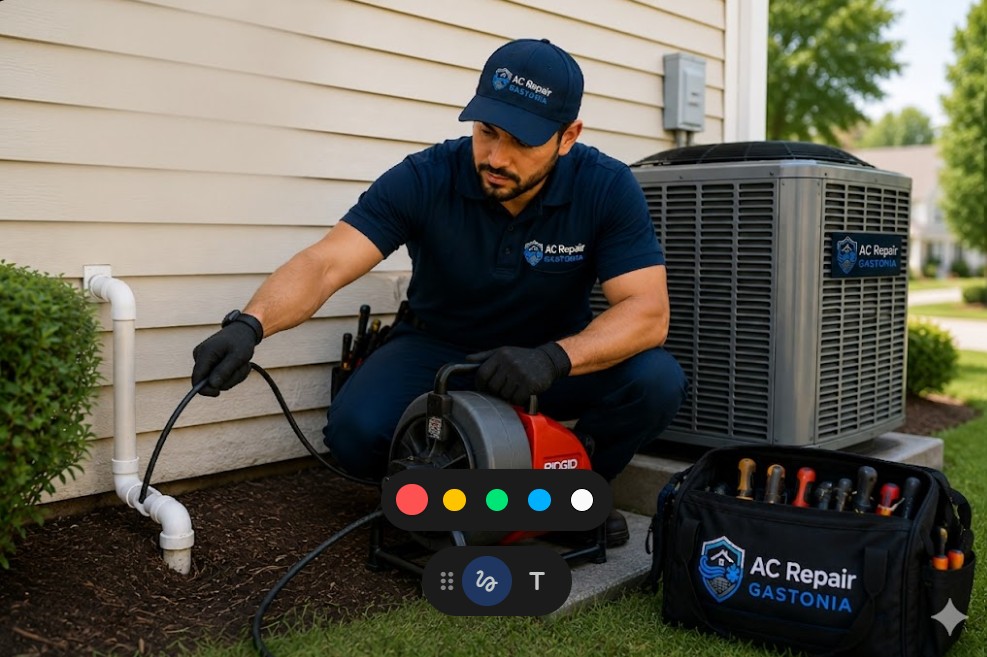
A blocked condensate drain line is one of the most common reasons residential AC systems shut off unexpectedly or allow moisture to accumulate near the air handler. Gastonia AC Repair clears the clog, tests the full drain path, and confirms the system is draining freely before the visit ends — so the problem doesn't quietly return a few weeks later.
Drain Line Cleaning Near Me in Gastonia, NC
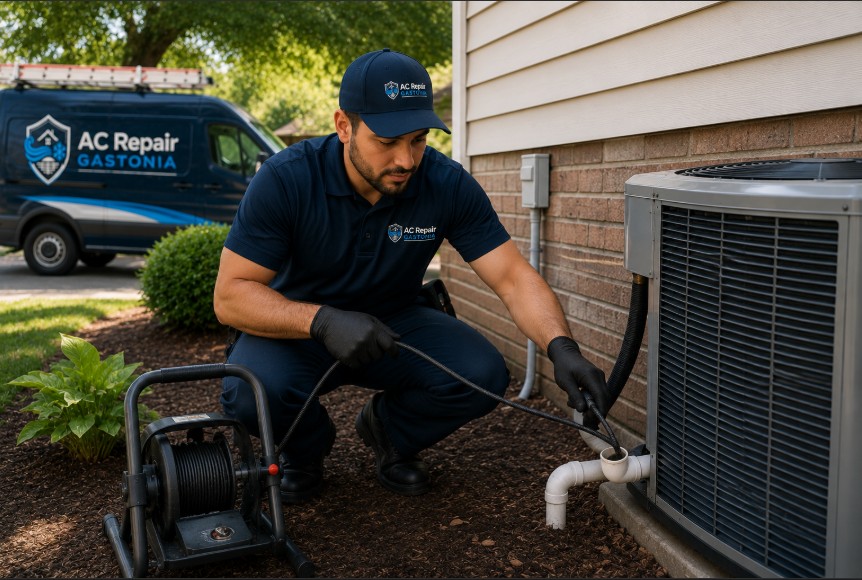
AC drain line cleaning in Gastonia is one of the more common residential service calls during the warmer months — condensate builds up naturally as the system runs, and when the drain path is even partially blocked, that moisture has nowhere to go. Gastonia AC Repair clears the full condensate drain path and confirms the system is draining freely before the visit ends — not just flushing the visible clog and moving on.
Most homeowners notice the problem through water pooling near the indoor unit, an AC that shuts off without explanation, or a drain pan that's sitting full when it shouldn't be. These are quiet signs that the condensate line is restricted — and during Gastonia's warmer months, when systems run longer and produce more moisture, a partial clog can become a full blockage faster than expected.
Signs Your AC Drain Line May Be Clogged
Most condensate drain problems don't announce themselves immediately. They show up quietly — a water stain, a smell, a system that cycles off at an odd time. Knowing what to look for makes the difference between catching a partial clog early and dealing with the consequences of a full blockage later.
Water Near the Indoor Unit
Pooling or dripping moisture around the base of your air handler is one of the more direct signs of a condensate drain line problem. When the drain path is blocked, water that has nowhere to go will overflow the pan and collect at the unit's base.
Drain Pan Full or Standing
An AC drain pan should remain mostly dry during normal operation — it's a secondary catch, not a primary reservoir. If the pan is consistently holding water, the condensate line is not clearing moisture at the rate the system is producing it.
Musty Smell Near Vents
Stagnant condensate creates an environment where mold and mildew can establish inside the drain pan or the base of the air handler. A musty odor coming from supply vents or cooling equipment is a reliable early signal that moisture is sitting somewhere it shouldn't be.
AC Shuts Off Without Warning
Many residential systems include a float switch in the condensate pan — a safety device that cuts power to the unit when water rises above a set level. If your AC stops mid-cycle without an obvious reason, float switch activation from a draining problem is a common cause worth checking before assuming a larger system issue.
Indoor Humidity Feels Higher
Part of your AC's job is removing moisture from indoor air as it cools. When a clogged condensate line reduces system efficiency or causes partial shutdowns, that dehumidification function is interrupted — and the air inside the home begins to feel heavier and more uncomfortable than the thermostat setting suggests.
Inconsistent Cooling Cycles
A system that runs and cools normally for a stretch, then cuts out or underperforms before cycling back, is showing interrupted operation. When that pattern doesn't trace back to thermostat settings or obvious airflow problems, a condensate drainage interruption is often the overlooked factor.
Moisture Around the Air Handler
Visible condensation collecting on the cabinet or surrounding wall of your indoor unit can be confused with a refrigerant issue, but in warmer months especially, this kind of surface moisture is frequently linked to condensate backing up inside the unit rather than escaping through the drain line.
Struggles During Warmer Weather
Condensate volume increases significantly when a system runs longer during Gastonia's warmer months. A partial blockage that causes no visible problems in mild weather can become a full drainage failure quickly when the system is producing more moisture than a restricted drain path can handle.
Recurring Moisture Buildup
A single instance of water near the unit might resolve after the pan drains. But if moisture appears repeatedly in the same location across multiple cooling cycles, that pattern almost always points to a condensate line that needs to be cleared — not a one-time event that worked itself out on its own.
One Pattern Worth Taking Seriously
Most of the signs above are quiet — easy to dismiss as minor or seasonal. The challenge with a clogged AC drain line is that the system keeps running through early stages of the problem, which can make it feel less urgent than it is. By the time water is visible or the system shuts off, the clog has typically been developing for some time. Catching these signals early — before a partial restriction becomes a full blockage — is what drain line cleaning in Gastonia is most often called in to address. A system that shows more than one of these signs at once is worth having checked sooner rather than later.
When the system has already shut off
If your AC has stopped running and the float switch is the likely cause, the system won't restart until the pan moisture is addressed and the switch resets. That situation moves from a maintenance call into something more time-sensitive — especially during a hot stretch of weather. Gastonia AC Repair handles both scenarios, but if your system is currently off and won't restart, the emergency AC repair page covers what to expect from a same-day service call.
What Causes AC Drain Line Clogs?
Condensate drain lines don't typically clog all at once. The process is gradual — organic material accumulates, moisture sits longer than it should, and flow becomes restricted over multiple cooling cycles. Understanding what drives that buildup helps explain why drain line cleaning in Gastonia is a routine part of keeping a residential system reliable, not just a reactive fix.
The inside of a condensate drain line stays cool and damp — conditions that algae thrive in. Over time, algae growth forms a soft, gelatinous layer that coats the interior of the line and steadily narrows the passage water needs to drain through. Left unaddressed, that layer thickens until flow stops entirely.
As condensate water cycles through the drain pan and into the line, it carries dust, skin cells, and airborne particles pulled from the indoor air. That material mixes with standing moisture and forms a sludge layer that adheres to the drain pan and line walls — eventually restricting flow even when no single large blockage is present.
Mold spores are naturally present in indoor air, and when they settle into a drain pan or condensate line that holds standing water between cycles, they find ideal growing conditions. Mold growth contributes both to physical blockage and to the musty odors that homeowners often notice near vents or the air handler — a sign that the drain system needs to be cleared and flushed, not just partially cleaned.
Insulation particles, dust from the evaporator coil area, and fine debris from around the air handler can work their way into the drain pan over time. In systems where the air filter has been overdue for replacement, the volume of particulate reaching the condensate components increases — compounding the rate at which the drain line becomes restricted.
When a cooling system sits inactive through the off-season, any water remaining in the drain pan or line doesn't drain completely — it evaporates slowly, concentrating the organic material it carried. That residue becomes a primer coat for algae and sludge when the system starts running again in spring, which is why clogged AC drain line issues often surface early in the first extended warm stretch of the year.
The point where the drain pan connects to the condensate line is often the narrowest part of the drainage path — and the first place restrictions develop. Even a partial blockage at that junction slows the entire system, causing the pan to fill faster than normal and increasing the moisture load on components that aren't designed to hold standing water. Clearing the full path from pan outlet through the drain line is what makes condensate drain cleaning effective.
The compound effect
When Several Causes Layer Together
In most residential situations, a clogged AC drain line isn't the result of a single cause — it's algae growth that's been sitting on a sludge layer that formed during the off-season on top of debris that was never flushed. These causes compound quietly, often without any visible sign until the drainage path finally fails under the increased condensate load of a busy cooling season. Systems that receive regular seasonal attention are less likely to experience full drain line failures because the buildup is cleared before it has a chance to compound. If the last time your system's condensate components were inspected or cleaned was more than a season ago, AC maintenance visit is often the right first step — not just for the drain line, but for the system overall.
Gradual Restriction
Most clogs develop over multiple cooling seasons — rarely appearing overnight.
Peak-Season Pressure
A partial clog that holds during mild weather often fails when summer demand increases condensate volume.
Gastonia AC Repair
Clears the full drain path and verifies drainage is restored — not just the visible end of the line.
Why Drain Line Problems Affect Cooling Performance
A clogged condensate drain line is easy to frame as a plumbing problem — but its effects land squarely in the cooling system. When moisture can't exit the system properly, the AC responds in ways the homeowner feels directly: the house gets muggier, the system runs less consistently, and comfort becomes harder to maintain on the days it matters most.
Unexpected System Shutdowns
Float switches cut power to the AC when drain pan water rises too high — a protection feature, but one that leaves a home without cooling until the moisture situation is addressed. During a hot stretch, that shutdown can feel urgent fast, which is why this kind of drainage failure often becomes an emergency AC repair call rather than a routine one.
Elevated Indoor Humidity
Dehumidification is a secondary function of any central cooling system — moisture is pulled from the air across the evaporator coil and exits through the condensate line. When that exit path is restricted, excess moisture stays in circulation indoors, raising the humidity level even when the thermostat reads exactly where it should.
Inconsistent Room Temperatures
Cooling cycles interrupted by drainage issues — whether through partial shutdowns or system hesitation — produce uneven results across the home. One room holds temperature while another drifts warmer. That inconsistency is often the first thing homeowners notice before they trace the problem back to the condensate drain line at all.
Reduced Efficiency Under Seasonal Load
A system managing a restricted condensate drain has to work harder to maintain the same output — longer run times, more frequent cycling, and greater wear during the periods when demand is already at its peak. Gastonia AC Repair restores the full drainage path so the system can operate efficiently through the warmest stretches of the cooling season, not just during mild weather.
The drainage–comfort connection
One Drain Line,
Four Comfort Variables
Most homeowners associate AC problems with temperature — the system
either cools or it doesn't. But a clogged AC drain line creates
a more nuanced failure mode. The system may still run. The thermostat
may still hit its target. But the home feels off — slightly
humid, slightly inconsistent, or marginally less comfortable than the
numbers suggest it should be.
These subtler comfort signals are what make condensate drain problems
easy to dismiss early and easy to trace clearly once the system shuts
off entirely. Gastonia AC Repair approaches each service call by
verifying the full drainage path — not just the visible clog —
because a partially cleared drain line can allow the same comfort
erosion to return within a few weeks.
Temperature Control
Drainage interruptions create uneven cooling room to room before a full shutdown occurs.
Humidity Balance
Restricted condensate drainage raises indoor humidity independent of outdoor conditions.
System Runtime
Drainage problems force longer cycles to compensate for reduced efficiency — especially during peak demand.
Consequence sequence — condensate restriction to comfort impact
Develops
Slows
Backs Up
Strain
Rises
Declines
Our AC Drain Line Cleaning Process
A service call for drain line cleaning in Gastonia follows a consistent path — one that starts with understanding the full drainage situation and ends with confirmation that the system is draining properly. Gastonia AC Repair doesn't treat condensate drain cleaning as a single-step flush. Each visit works through the drain path systematically so the problem is resolved, not just temporarily cleared.
Initial Drainage Inspection
The visit begins with a check of current condensate flow — how water is moving (or not moving) through the drain pan and into the line. This gives a baseline picture of where the restriction is and how significant it is before any cleaning begins, rather than working blind from the drain outlet alone.
Drain Pan & Air Handler Check
The drain pan and the area around the indoor air handler are checked for standing moisture, sludge accumulation, and any signs of overflow. A pan that has been holding water often has buildup at the pan outlet — the narrowest point in the drainage path — which needs to be addressed before the line itself is cleared.
Blockage Clearing
Algae growth, sludge buildup, and debris accumulation are cleared from the drain line — working from the pan outlet through the full length of the condensate line. The approach depends on what's causing the restriction: biological buildup like algae clears differently than particulate debris, and the service adapts to what the inspection found.
Full Line Flush & Flow Test
After clearing, the full condensate drain path is flushed and water movement through the line is tested to confirm drainage is restored end to end — not just at the access point. A line that appears clear at one end can still hold a secondary restriction further along, which is why the flush and flow test is a non-negotiable part of the process rather than a final formality.
System Operation Verification
With drainage confirmed, the cooling system is checked to verify it's operating normally — cycling correctly, not triggering the float switch, and maintaining stable indoor conditions. The visit ends when the drain is clear and the system is running as it should, not when the cleaning steps are technically complete.
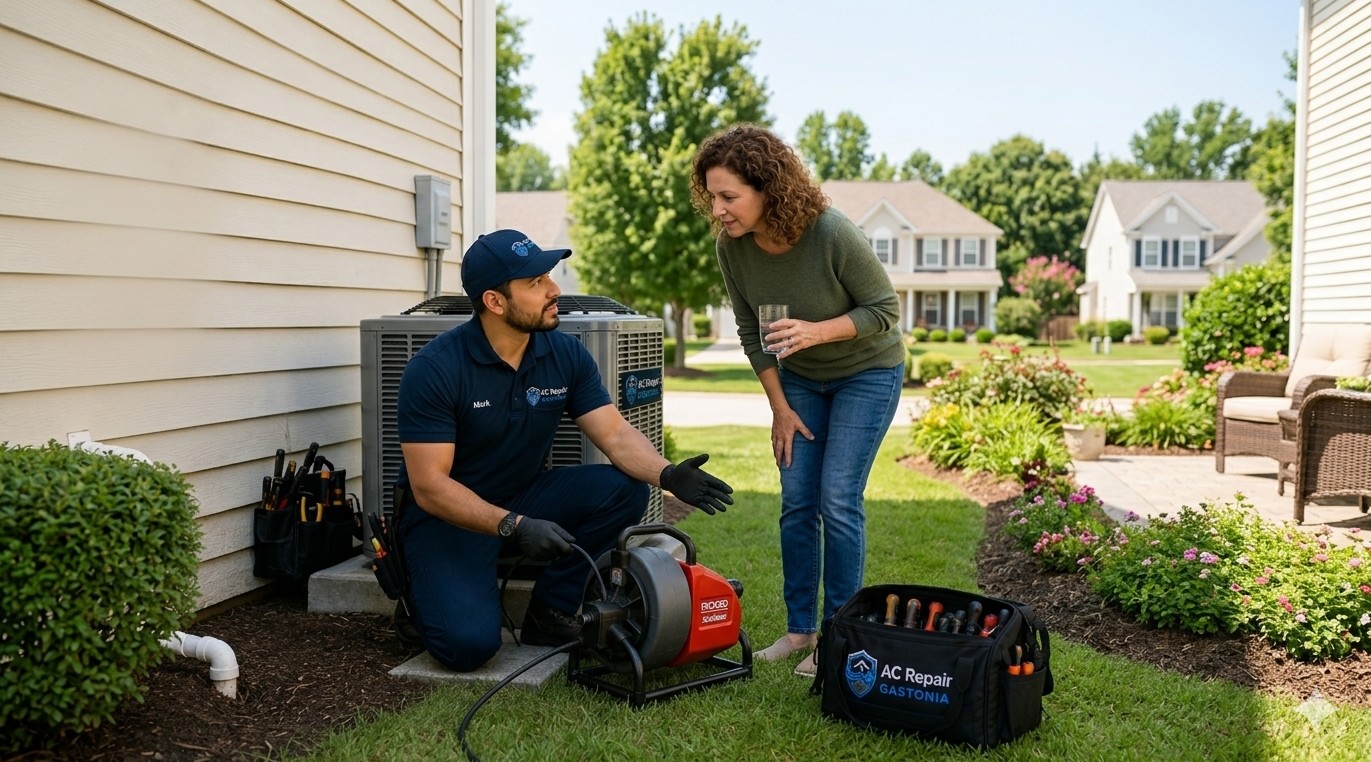
For most homeowners, drain line cleaning in Gastonia resolves the immediate moisture issue and restores normal cooling behavior in a single visit. In cases where the drainage problem has been developing for some time or the system shows signs of broader wear from running under strain, a more complete AC service visit may be the better starting point — one that addresses the drain line as part of a full system review rather than in isolation. Gastonia AC Repair handles both approaches, and the right call depends on what the inspection finds on the day of service.
Why Homeowners Call
Why Homeowners Choose Gastonia AC Repair
Drain line cleaning in Gastonia is often requested when cooling systems begin showing signs of moisture disruption, irregular cycling, or inconsistent indoor comfort. What homeowners usually want in that moment isn't a dramatic sales pitch — it's a service experience that feels clear, responsive, and professionally handled from the start.
Residential Focus
Cooling-System Issues Are Approached Calmly
Gastonia AC Repair approaches condensate drain cleaning with the understanding that most homeowners are simply trying to restore dependable indoor cooling — not navigate a complicated technical process. Visits are structured to identify what’s happening, explain the situation clearly, and move toward a practical resolution without unnecessary pressure or confusion.
Seasonal Reliability
Drainage Problems Are Viewed In Context
During warmer weather, residential cooling systems often run longer and cycle more frequently, which increases condensate production across the system. That’s why HVAC drain line cleaning isn’t treated as an isolated task alone — the broader cooling behavior of the system matters too. In situations where moisture buildup eventually affects overall cooling operation, homeowners may also need broader central AC repair support to restore stable performance completely.
Homeowner Experience
Professional Service Still Matters
For many homeowners searching for AC drain line cleaning or condensate drain cleaning near me, the quality of the service experience matters just as much as the technical work itself. Respectful communication, careful evaluation before recommendations, and clean in-home service practices all play a role in making the visit feel straightforward and dependable from arrival through completion.
Drain Line Cleaning FAQs
Most clogged condensate drain lines develop gradually from algae growth, moisture-related buildup, or small debris collecting inside the drainage path over time. As cooling systems run more frequently during warmer months, the drain line handles more condensation, which can increase the chance of buildup forming inside the line.
Yes. Many residential systems include safety controls designed to interrupt cooling operation when drainage problems are detected. In some cases, homeowners notice the AC system cycling differently or shutting down unexpectedly until the drainage issue is corrected. If cooling stops completely, additional emergency AC repair support may sometimes be needed alongside drain line cleaning.
When condensate drainage slows or becomes restricted, moisture may begin collecting around the indoor air handler or drain pan area. While several conditions can contribute to indoor moisture, restricted drainage is one of the most common reasons homeowners schedule AC drain line cleaning.
In many homes, condensate drain cleaning is included as part of broader HVAC drain line cleaning and seasonal cooling-system care. Regular inspection of the drain path helps reduce the chance of moisture interruptions developing during periods of heavier AC demand.
Over time, buildup can gradually return, especially during long cooling seasons where the system produces large amounts of condensation daily. Routine inspection and periodic cleaning help reduce the likelihood of recurring drainage restrictions before they begin affecting indoor comfort again.
Homeowners often notice slow moisture buildup near the indoor unit, unusual cycling behavior, or indoor cooling becoming less consistent than expected. A recurring condensate drainage issue may also lead to intermittent shutdowns or visible standing water around the air handler.
Schedule Drain Line Cleaning in Gastonia
A restricted condensate drain line can quietly interrupt indoor comfort long before the cooling system fully shuts down. Gastonia AC Repair provides calm, responsive residential service for homeowners dealing with moisture buildup, recurring drainage concerns, or a clogged AC drain line — helping restore reliable cooling performance with clean, professional support throughout the visit.
Whether you need seasonal AC drain line cleaning or help addressing signs of recurring condensate buildup, the goal is simple: dependable cooling, stable indoor comfort, and a scheduling experience that feels straightforward from start to finish. Homeowners experiencing broader airflow or cooling concerns can also learn more about central AC repair services.
Clean in-home HVAC service
Clear homeowner communication
Responsive seasonal scheduling