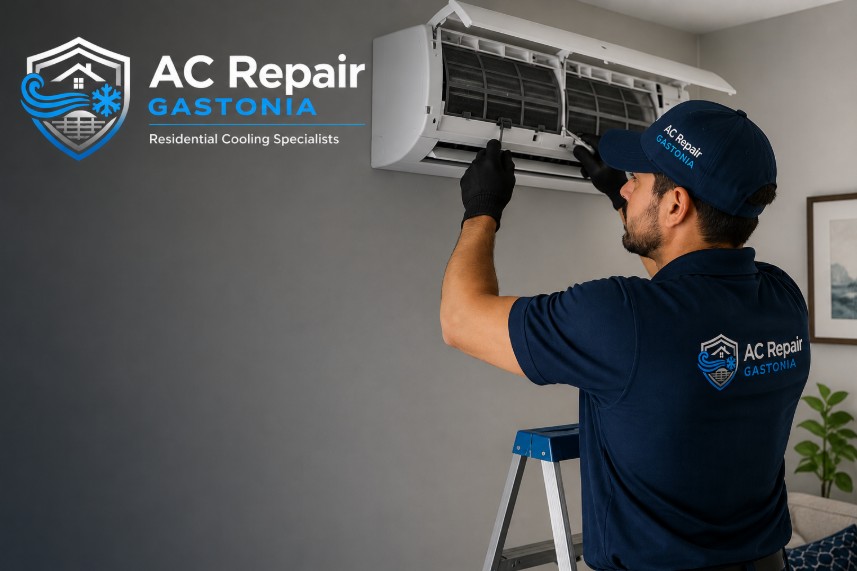
Mini Split Repair in Gastonia, NC
When one room won't cool down, the whole home feels off.
Mini split AC repair in Gastonia starts with understanding why the unit lost performance — not just replacing parts on assumption. Gastonia AC Repair diagnoses the root cause first, whether it's a refrigerant issue, drainage problem, sensor fault, or board failure — and restores quiet, balanced cooling to your room.
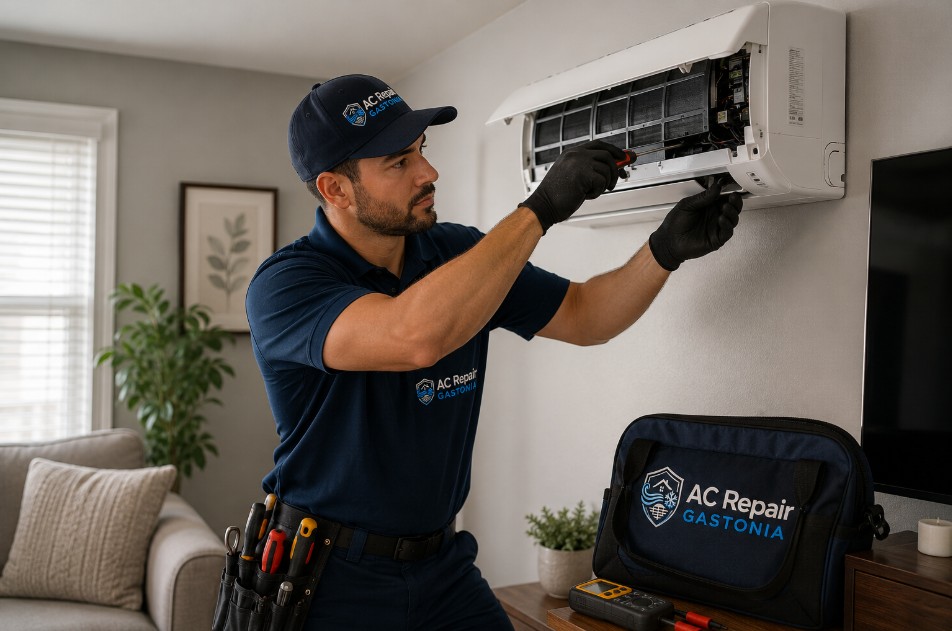
Mini-Split Air Conditioner Repair Service Gastonia, NC
Mini split repair in Gastonia often begins with a single room — a bedroom that won't cool down, a home office that feels stuffy no matter how low the thermostat is set. Unlike central systems, a ductless unit serves one space, which means when it underperforms, that room feels it immediately. Gastonia AC Repair approaches each mini split problem by understanding what changed — not by replacing parts until something works.
The room feels warm even when the unit is running.
A mini split running without cooling is one of the more disorienting experiences — the system sounds normal, the display shows the right temperature, but the room never reaches it. This typically points to a refrigerant issue, a dirty coil, or a sensor that's misreading conditions and failing to trigger a full cooling cycle.
The airflow has gone quiet — almost too quiet.
Mini split systems are designed to be quiet, so reduced airflow can go unnoticed longer than it would with a central system. A struggling blower wheel, a clogged filter, or ice forming on the indoor coil can all reduce output gradually — the room just slowly stops feeling cool without any obvious sign of failure.
Humid Gastonia evenings make it worse.
A properly functioning mini split removes both heat and moisture from the room. When the system is underperforming, humidity becomes the first thing a homeowner notices — the air feels heavy and close even when the temperature reads close to the set point. In Gastonia's summer conditions, a marginal unit that managed in spring often struggles noticeably once humidity climbs.
Common Mini Split AC Problems We Repair
Warm Air from the Indoor Unit
A mini split blowing warm or room-temperature air is the most common complaint homeowners bring in during Gastonia summers. The indoor unit may run normally — fan on, display showing the set temperature — but the room never reaches it. Low refrigerant from a slow leak is the most frequent cause, though a dirty evaporator coil or a sensor misreading indoor conditions produces identical symptoms. Diagnosis determines which — not assumption. This often connects to a broader refrigerant leak that has been losing charge gradually over one or two seasons.
Weak Airflow from the Unit
Reduced airflow from a mini split often goes unnoticed because the system is inherently quiet. A clogged air filter, a buildup on the blower wheel, or ice forming on the coil each restrict output — the room simply cools more slowly until it doesn't cool at all.
Mini Split Leaking Water Indoors
A dripping or pooling indoor unit is almost always a drainage problem — a blocked condensate drain line that causes water to back up into the unit housing. Left unaddressed, it leads to moisture damage and mold growth inside the indoor head.
Frozen Evaporator Coil
Ice forming on the indoor coil blocks airflow and heat exchange — the system may appear to be working while producing almost no cooling. Restricted airflow or a refrigerant issue are the most common triggers. Running the unit with a frozen coil accelerates the underlying problem.
Unit Turns On and Off Repeatedly
Short cycling in a mini split — starting, running briefly, then stopping — usually indicates a sensor fault, a refrigerant pressure issue, or an electrical problem causing the system to trip its own protection. Each failed cycle adds wear to the compressor.
Room Stays Uncomfortable Despite System Running
In Gastonia's humid summers, a mini split that's marginal — slightly low on refrigerant, partially restricted, or sensor-inaccurate — can manage a room in mild conditions but fail noticeably once humidity climbs. The system runs continuously without ever reaching the set temperature, and the air feels heavy and close rather than cool and dry. This pattern often points to a compressor working beyond its efficient range, a coil that can't transfer heat properly, or a combination of smaller issues that compound under load. These are the cases where a full system inspection — not a single-component swap — delivers a lasting result.
Unusual Sounds from the Indoor Head
A rattling, grinding, or clicking indoor unit often signals debris on the blower wheel, a loose component, or a bearing beginning to fail in the fan motor. Mini splits are quiet by design — any new noise is worth addressing before it develops into a motor replacement.
Incorrect Temperature Readings
Mini split systems rely on indoor sensors to regulate cooling cycles. A faulty thermistor or sensor reading ambient conditions inaccurately causes the system to stop cooling too early, run too long, or fail to start a full cycle — even when the remote shows the correct set temperature.
Room Feels Humid Despite Cooling
A properly functioning mini split dehumidifies as it cools. When the unit is underperforming, moisture removal drops before cooling does — the room reaches a bearable temperature but the air still feels heavy and uncomfortable, especially during Gastonia's summer afternoons.
Every mini split repair begins with a full system diagnosis. We inspect the indoor unit, outdoor compressor, refrigerant levels, drainage, and electrical components before recommending any repair — the same thorough approach we apply to every central AC repair in Gastonia.
First-Visit Diagnosis
Restoring Comfortable Cooling
to Every Room
Mini split systems serve individual spaces — which means when one isn't performing, a specific room in your Gastonia home bears the full weight of that problem. Here's how that plays out in real living spaces.
Bedroom
"It was comfortable at 10pm but I woke up at 3am hot."
Bedrooms served by a single mini split unit feel warm overnight when the system is underperforming during the hours it runs most continuously. A low refrigerant charge that barely manages the room in the evening can fail to maintain temperature when outdoor humidity peaks before dawn. Gastonia nights in July and August rarely cool enough to compensate.
Home Office
"It's impossible to focus — the room just won't cool down."
A home office with a struggling mini split creates a productivity problem as much as a comfort one. Electronics add heat load, and a unit with restricted airflow or a partially blocked coil can't keep pace. When the room reaches 80°F by midday despite the unit running, there's a diagnosable performance issue — not just a "weak" system.
Garage Conversion
"The mini split runs all day but barely makes a difference."
Converted garages present the hardest cooling challenge in Gastonia homes — high ceilings, poor insulation, and direct sun exposure create extreme heat load. A mini split in this space has to work at full capacity just to keep pace. Any reduction in performance from a dirty coil, low refrigerant, or a weak blower makes the room nearly unusable during summer afternoons.
Upstairs Room
"Ten degrees warmer than downstairs, all summer long."
Heat rises — and an upstairs room in a Gastonia home on a 95°F afternoon can accumulate serious heat through the ceiling and roof. A mini split handling this space needs to be fully operational. Even a moderate refrigerant shortfall that's manageable on the ground floor becomes a significant comfort failure one level up.
Sunroom / Addition
"The glass walls make it a greenhouse by noon."
Sunrooms and room additions are often served by a dedicated mini split because they sit outside the central system's reach. With glass on multiple sides, solar gain in summer is intense. A unit running below peak efficiency can't compensate — the room becomes unusable during the hours homeowners most want to use it.
Master Suite
"Quiet cooling that just… stopped being quiet enough."
Master suites often get a mini split specifically for quiet, independent temperature control. When the unit develops a fault — a bearing beginning to wear, a blower wheel collecting debris — the noise becomes the first symptom homeowners notice. A clicking or rattling indoor head in a bedroom is a repair to address before it becomes a motor replacement.
Every room has a different heat load, airflow dynamic, and comfort expectation. Our diagnostic approach accounts for the space — not just the unit. That's why mini split repair in Gastonia homes often reveals context that a part-swap-first approach would have missed.
How Mini Split AC
Problems Are Diagnosed
We check the indoor unit's airflow output and filter status. A clogged filter or restricted blower wheel is one of the most common causes of reduced cooling in Gastonia homes — and one of the fastest to confirm on-site.
We inspect the indoor coil for ice, dirt buildup, or restricted heat exchange. The condensate drain is checked for blockage — a leading cause of mini split water leaks in humid summer conditions.
Pressure readings confirm whether the system is operating within the manufacturer's specified range. Low pressure points to a refrigerant leak that requires locating before any recharge.
Mini splits rely on thermistors and communication boards to regulate cooling cycles. A faulty sensor or board fault causes the system to stop short of the set temperature — often with no visible error on the display.
We inspect the outdoor unit's compressor operation, capacitor condition, and electrical connections. Short cycling, startup failure, and reduced output often trace to the outdoor unit rather than the indoor head.
Mini split AC repair in Gastonia begins with understanding what the system is actually doing — not what it appears to be doing. A unit that runs continuously without cooling a room, a unit that starts and stops repeatedly, or a unit leaking water each point to a different root cause. Finding that root cause on the first visit is what allows most repairs to be completed without a return call.
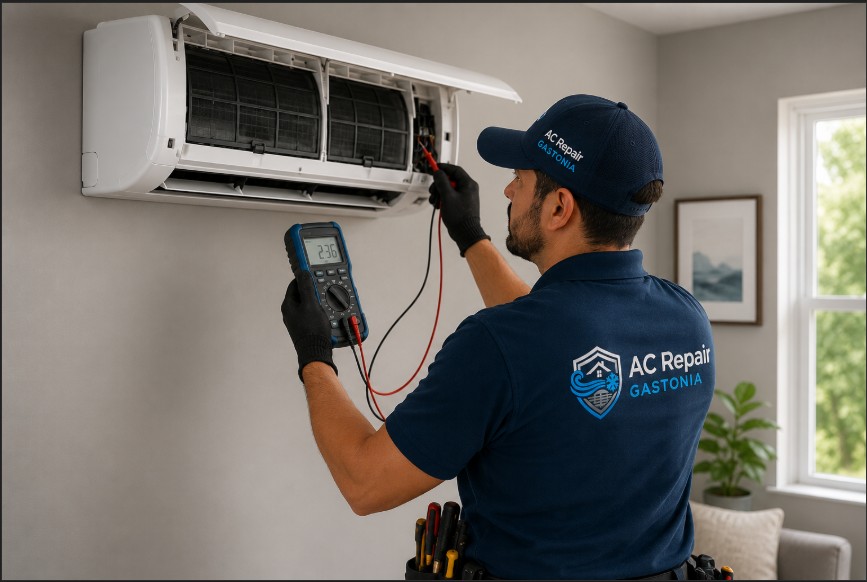
On-site mini split AC diagnosis · Gastonia, NC
At Gastonia AC Repair, our technicians inspect all five areas above before recommending any repair. In many ductless AC cases near Gastonia, a gradual refrigerant loss over one or two seasons — combined with a slightly dirty coil and increased summer humidity — compounds into what feels like a sudden performance failure. A diagnosis that identifies all contributing factors produces a repair that holds; a diagnosis that catches only one often returns within weeks.
"Two other companies came out, topped up the refrigerant, and it was warm again within a month. Gastonia AC Repair found the leak source, fixed it properly, and the system has been running perfectly since. It was the diagnosis that made the difference."
Every mini split repair we perform includes a written quote before any work begins — and a post-repair test to confirm cooling performance, drainage, and cycle behavior before we leave the home. The room should be comfortable when we go, not just technically repaired.
NC Licensed HVAC · EPA 608 Certified · Written workmanship guarantee on every repair
Serving Gastonia & Gaston County residential homes · Drain line cleaning also available
Trusted Mini Split
Repair in Gastonia
Diagnosis Before Anything Else
Mini split repair in Gastonia begins the same way every time — with a complete inspection before any recommendation is made. No component is replaced on assumption. We identify the root cause of the cooling problem, explain it clearly, and provide a written quote before touching anything. Homeowners who've had parts replaced by other services with no lasting result often find the underlying cause was never properly diagnosed.
Residential Work Done With Care
Working inside a home is different from a commercial site. Quiet bedrooms, home offices, and living spaces deserve a technician who understands that the goal isn't just to fix the unit — it's to restore comfortable, quiet cooling to a room someone actually lives in. We work carefully, explain findings in plain language, and leave the work area clean. No unnecessary noise, no unexplained charges at the end.
"Our bedroom mini split had been struggling through summer for two years. Gastonia AC Repair found the problem in one visit — a partially blocked drain and low refrigerant together — and fixed both the same day. The room has been perfectly quiet and cool ever since."
Most Repairs Completed Same Visit
Our service vehicles carry the components most commonly needed for residential ductless AC repair near Gastonia — capacitors, sensors, drain line equipment, refrigerant, and more. 98% of mini split repairs are completed on the first visit, without scheduling a return trip for parts. When a room stops cooling in the middle of a Gastonia summer, that matters. If a more complex repair is needed — such as a compressor replacement — we'll tell you honestly, clearly, and upfront.
Serving Gastonia and Gaston County residential homes · Drain line cleaning available as a standalone service
Gastonia AC Repair — Mini Split SpecialistMini Split Repair FAQs
Questions homeowners ask before scheduling mini split AC repair in Gastonia. Answered directly — no filler, no sales language. If your question isn't here, reach out and we'll answer it honestly.
Why is my mini split not cooling properly?
The most common causes are low refrigerant from a slow leak, a dirty evaporator coil, or a sensor reading indoor conditions inaccurately. All three can produce the same symptom — the unit runs, the fan moves air, but the room never reaches the set temperature. In Gastonia's humid summers, even a marginal refrigerant shortfall becomes a noticeable comfort problem once heat and humidity climb. A proper diagnosis identifies which of these is responsible before any repair is recommended.
Why is water leaking from my mini split?
A dripping or pooling indoor unit is almost always a blocked condensate drain line — the tube that carries moisture out of the indoor head during normal operation. When it clogs (often from algae or debris in humid conditions), water backs up into the unit housing and eventually overflows. Left unaddressed, it leads to mold growth and damage to the wall or ceiling behind the unit. This is one of the most straightforward mini split problems to resolve — but timing matters.
Why does one room still feel warmer than the others?
A room served by a mini split that feels noticeably warmer than the rest of the home usually has a unit that's underperforming relative to that room's heat load. Possible causes include low refrigerant, restricted airflow from a clogged filter or dirty coil, or a sensor that's stopping the cooling cycle before the room actually reaches temperature. Upstairs rooms and sun-facing spaces in Gastonia homes are most vulnerable — their heat load is higher, so any reduction in the unit's output becomes immediately noticeable.
Can Gastonia's humid weather affect mini split performance?
Yes — significantly. A well-functioning mini split removes both heat and moisture from the room. When the system is underperforming, humidity removal drops before cooling does — the room reaches a bearable temperature but the air still feels heavy and uncomfortable. Gastonia averages 80+ days above 90°F each year, with high overnight humidity that compounds the problem. A unit that managed adequately in spring often struggles noticeably once peak summer humidity arrives — which is why problems that seem to develop "suddenly" often have a gradual underlying cause.
Why is my mini split making unusual noises?
Mini splits are quiet by design — any new sound is meaningful. Rattling or clicking often indicates debris on the blower wheel or a loose mounting component. Grinding usually points to bearing wear in the indoor fan motor. Hissing can indicate refrigerant escaping through a small leak. The sound type narrows the likely cause before the technician even arrives, which speeds diagnosis. If the noise started recently, addressing it now is almost always less costly than waiting for a component failure.
Why does my mini split keep running constantly?
Continuous operation means the system is failing to satisfy the thermostat setting — it runs because the room never reaches the set temperature. The most common causes are low refrigerant, a dirty condenser coil that can't reject heat efficiently, or restricted airflow limiting the unit's cooling output. In Gastonia's peak summer heat, a marginally underperforming mini split will run continuously while driving up energy bills noticeably. A refrigerant leak that's been losing charge slowly over one or two seasons is a common culprit behind this pattern.
What causes weak airflow from a ductless AC system?
Weak airflow from a mini split almost always comes from one of three sources: a clogged air filter restricting intake, debris accumulated on the blower wheel reducing fan output, or ice forming on the evaporator coil blocking heat exchange. Because mini splits are quiet, reduced airflow often goes unnoticed for weeks — the room just slowly stops feeling as cool. A filter that should be cleaned monthly in a dusty environment and isn't is one of the most common causes of weak airflow in residential mini split systems across Gaston County.
Gastonia AC Repair approaches every mini split service call with a full system inspection before making any recommendation — the same standard we apply whether it's a simple drain line issue or a refrigerant diagnosis. If your situation isn't covered above, reach out and we'll give you a straight answer before you commit to anything.
Restore Comfortable Cooling in Every Room
Whether it's a bedroom that won't cool down at night, a home office that's unusable by noon, or a system that runs constantly without reaching the set temperature — the problem has a diagnosable root cause. Gastonia AC Repair finds it on the first visit, explains it clearly, and repairs it properly. Most mini split repairs are completed the same day, with a written workmanship guarantee included.
Upfront quote before any work · Same-day availability · Gastonia & Gaston County