
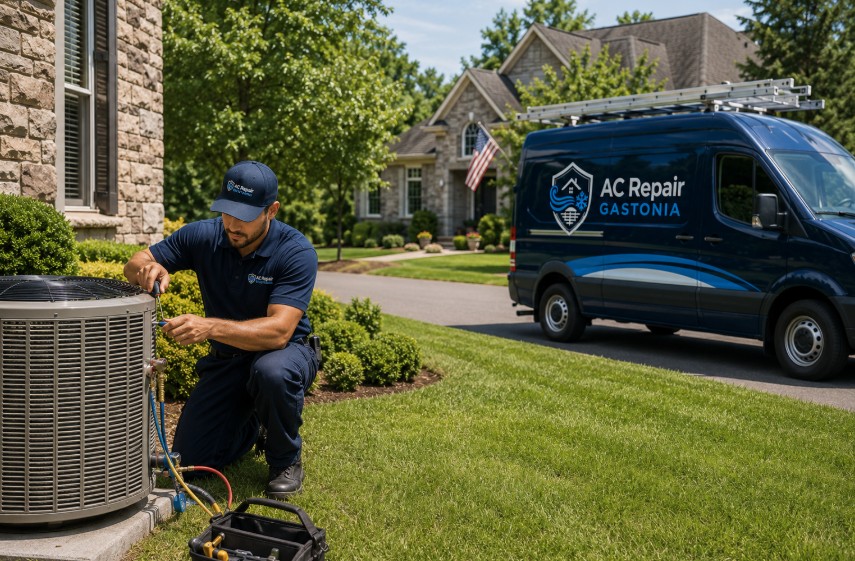
AC Repair in Cramerton, NC Fast, Local & Licensed
When your AC stops working in Cramerton, Gastonia AC Repair sends an licensed technician your way — often within the hour. We've handled AC repair across Gaston County, and we show up with upfront pricing and a written estimate before any work begins.
Professional AC Repair
in Cramerton, NC
Cramerton is about 8 miles east of our Gastonia shop along US-29/74 (Wilkinson Boulevard) — closer than any of the other Gaston County towns on our route. That's not a marketing distinction, it's a practical one: a Cramerton call doesn't require rerouting a technician across the county, which is part of why response times here tend to run at or ahead of our countywide average.
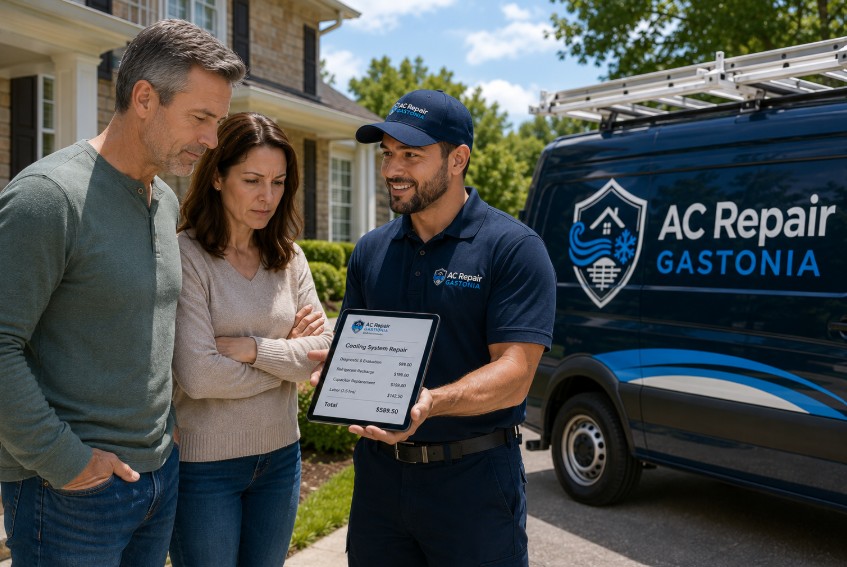
Every technician who comes to your door is licensed, certified for refrigerant handling, and insured for residential work. Before any repair starts, you get a written estimate with a stated price. If the diagnostic turns up something the initial call didn't cover, we stop, explain what changed, and get your approval on a revised estimate before continuing.
The repair calls we run in Cramerton skew a bit differently than in some of the surrounding towns. Downtown and the mill-village core have a real mix of building types — some homes with central systems original to a 1990s or 2000s addition, some loft-style residences converted from the town's original textile mill buildings running ductless mini-split systems instead of central air, and newer construction along the river with fully current equipment. We diagnose based on what's actually installed at your address, not a one-size assumption.
A Mill Village on the River —
and Three Different Kinds of AC Systems
Cramerton was built as a planned textile mill village in the early 1900s, developed by Stuart W. Cramer along the South Fork River. The mills are gone, but the town's layout still reflects that history — and it means the AC equipment we find on a Cramerton service call varies more by what kind of building it is than by simple age. Here's the breakdown that actually matters for a repair visit.
One footnote worth knowing: Stuart Cramer, the textile engineer who developed the mill village that became Cramerton in 1910, is generally credited with coining the term "air conditioning" itself, in a 1906 patent for controlling humidity in textile mills. It's a coincidence of naming, not a claim about the equipment in your home today — but it's a genuinely unique piece of trivia for a town this size.
Downtown & the Mill Conversions
Homes and residences in and around historic downtown Cramerton include a real mix — some original mill-village houses from the 1910s–1920s with additions and retrofitted ductwork, and converted mill buildings (like the residential communities built into the old Cramerton Mills structures) that use wall-mounted ductless mini-split systems instead of central air. Ductless systems are diagnosed differently: there's no shared duct system to check for leaks, so problems usually trace to the refrigerant lines between the indoor and outdoor units, the line-set connections, or the unit itself.
Cramer Mountain & Hillside Homes
On the southwest side of town, Cramer Mountain's gated golf-course community sits at a noticeably higher elevation than downtown. Homes here tend to be larger, often with multi-zone systems or two separate units covering different parts of the house. A hillside lot changes a few practical things for a technician — mainly outdoor unit placement, sun exposure, and drainage around the pad — but the diagnostic process is the same as anywhere else.
Newer Construction Along the River
Cramerton's growth along the South Fork River and toward its edges has brought in newer single-family construction with current-generation equipment. These calls are less often about aging components and more often about airflow balance, thermostat/zoning configuration, or manufacturer warranty coverage — we check warranty status as part of the diagnostic when the system is recent.
None of this changes how a service call works — every visit starts with a diagnostic, not a guess. But knowing that Cramerton has genuinely mixed equipment types (not just mixed ages) is part of why we ask a few extra questions when you call: what kind of building it is, whether you have a wall-mounted unit or a central system, and roughly when it was last serviced. That helps the technician bring the right parts on the first visit.
What Your AC Is Telling You —
Before It Becomes a Bigger Repair
Most AC failures give some warning before the system stops entirely. In Cramerton, where central systems and wall-mounted ductless units are both common, a few of these signs point in different directions depending on which type of system you have.
The system runs constantly but never quite catches up
This shows up on both central and ductless systems, but the likely cause differs. On a central system, it usually points to refrigerant loss, a dirty coil, or a compressor losing capacity. On a ductless mini-split — common in Cramerton's mill-conversion residences — the same symptom often traces to the outdoor unit's refrigerant lines or a restricted indoor filter, since there's no ductwork to lose air through in between.
Ice on the outdoor unit, the refrigerant lines, or a ductless indoor coil
Ice forming on any part of a cooling system — central or ductless — almost always means airflow or refrigerant charge is off. Continuing to run the unit while iced adds strain to the compressor. The right first step is to shut the system off and let it thaw fully before a technician arrives, regardless of which system type you have.
New noises from a wall-mounted unit or an outdoor condenser
Ductless indoor units are wall-mounted, and a rattle that wasn't there before is often a loose mounting bracket rather than an internal fault — worth checking before assuming the worst. On outdoor condensers (central or ductless), a new grinding or squealing sound more often points to a fan motor or bearing issue. Either way, a new noise is worth a diagnostic call rather than waiting it out.
The house feels cool by the thermostat but still humid
Cramerton's location along the South Fork River means ambient humidity runs a bit higher in the low-lying parts of town than in the hillier sections. A system that reaches the set temperature but leaves the air feeling clammy is usually short-cycling — either from oversized equipment or a refrigerant charge issue — and that pattern is often more noticeable in homes closer to the river.
A ductless unit's remote shows an error code, or the indoor unit blinks a light pattern
This one is specific to ductless mini-split systems, which are common enough in Cramerton's mill-conversion housing to be worth calling out on its own. Most mini-split brands use blinking-light or remote-display error codes to indicate a fault category before a technician even arrives. If your indoor unit is displaying a code, note it (or take a photo) before calling — it speeds up the diagnostic conversation.
Any of these is worth a call regardless of which system type you have. A diagnostic identifies what's actually wrong before any repair is recommended, and a written estimate follows before work starts.
Common AC Repairs in Cramerton Homes
Cramerton's mixed housing stock — central systems in most single-family homes, ductless mini-splits in the mill-conversion residences downtown, and larger multi-zone setups on Cramer Mountain — means the repair calls we get here cover a wider range of equipment types than in a town with mostly one housing style. Every call starts with identifying what's actually installed before diagnosing the fault.
Wall-mounted ductless systems fail differently than central air. Common issues include a clogged internal filter restricting airflow, a refrigerant line leak between the indoor and outdoor units, a failing indoor fan motor, or a communication fault between the indoor head and outdoor compressor unit (common on multi-zone setups). Because there's no ductwork to inspect, diagnosis moves faster on these systems once the unit itself is accessed.
A refrigerant leak reduces cooling capacity whether the system is central or ductless. The correct repair sequence is locating the leak, sealing it, and only then performing an AC recharge — adding refrigerant without finding the source just delays the same failure.
A failed capacitor or contactor is one of the most common reasons an outdoor unit won't start, hums without turning over, or trips a breaker repeatedly. Most capacitor and contactor replacements are completed on the initial visit when the part is confirmed faulty.
Compressor problems can resemble refrigerant or electrical faults until properly tested. Compressor repair is a larger job, and on either system type we confirm the compressor is actually at fault — not just assumed — before recommending it.
On central systems, a failing blower motor shows up as weak airflow at the registers even though the outdoor unit sounds normal. On ductless units, the equivalent is a weak indoor fan — the wall unit runs, but air movement into the room drops noticeably.
Both central air handlers and ductless indoor units have a condensate drain that can clog and back up. On a central system this can trip a safety float switch and shut the whole system down; on a ductless unit it more often shows as water dripping from the indoor unit itself. Drain line cleaning resolves it in most cases.
Emergency AC Repair
in Cramerton, NC
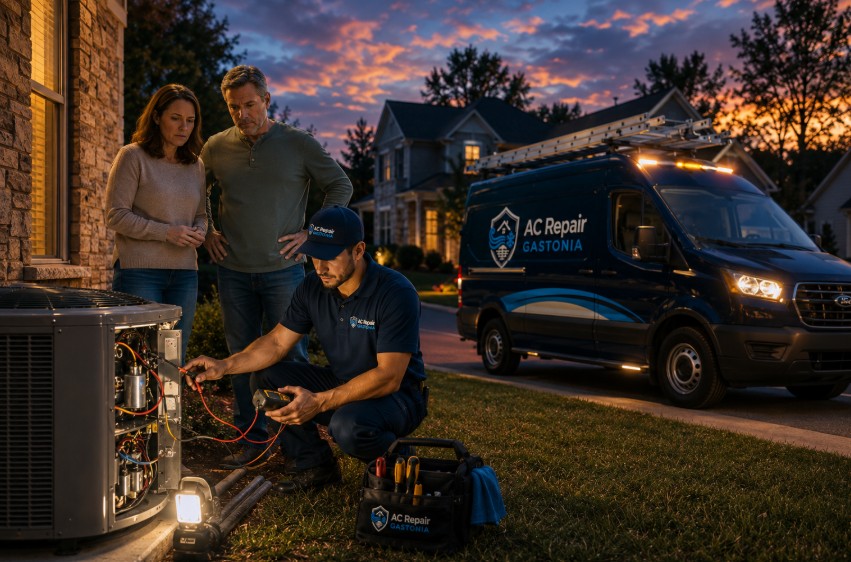
When your cooling system fails, our Emergency AC Repair service is available to Cramerton residents the same day — including during the sustained heat Gaston County sees through the summer months. Because Cramerton is one of the closest stops on our regular route (about 8 miles from our Gastonia base), a technician working nearby is often already close by rather than being pulled in from a farther town.
Our technicians carry the capacitors, contactors, and common electrical components that cover most emergency calls — for central systems and ductless mini-splits alike. Where a part needs to be sourced for an older or less common unit, we tell you that clearly before any work begins rather than after.
While your technician is on the way, a few steps can help maintain comfort and safety in the home:
AC Running But Not Cooling
in Cramerton?
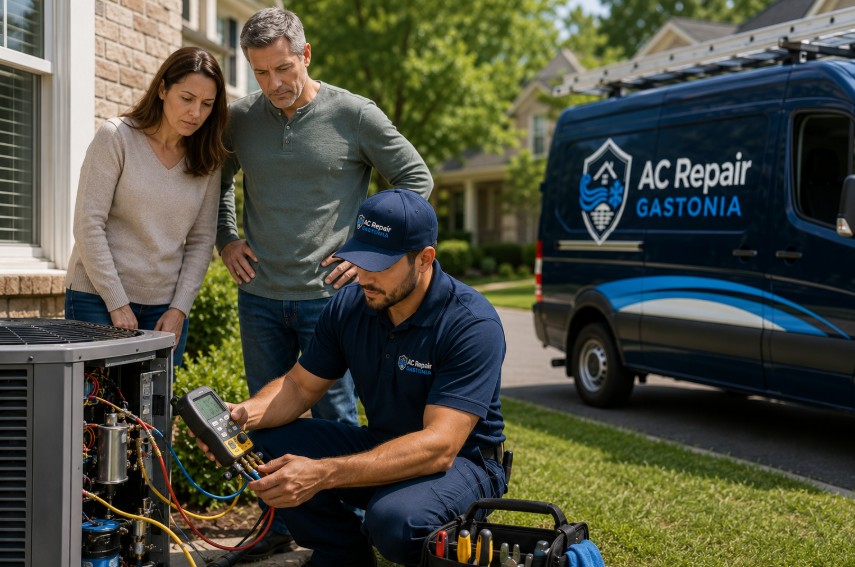
An AC system that appears to be running normally — outdoor unit cycling, thermostat set correctly — but still isn't cooling the home is a common call in Cramerton, and it comes from both central and ductless systems. Central units and wall-mounted ductless units can each show this exact symptom for different underlying reasons, which is why diagnosis starts with confirming what type of system is installed.
Refrigerant loss reduces the system's ability to transfer heat regardless of system type. A dirty or frozen coil restricts airflow at the indoor unit. On central systems specifically, duct leaks in older sections of ductwork can bleed conditioned air before it reaches the room. On ductless systems, there's no duct loss to consider — the issue is almost always at the unit, the line set, or the refrigerant charge itself.
A refrigerant leak is worth addressing here specifically: refrigerant does not deplete under normal operation. If a system is low on charge, something has allowed it to escape — and simply performing an AC recharge without locating the source of the loss is a temporary fix that leaves the underlying problem unresolved.
Gaston County sees more than 80 days above 90°F in a typical summer, and a cooling failure during that period does not resolve on its own. A proper diagnostic verifies airflow, checks refrigerant levels, inspects coil condition, evaluates compressor performance, and confirms overall system operation — before any repair recommendation is made.
How AC Repair Works When
You're 8 Miles from Our Shop
Cramerton sits closer to our Gastonia base than any other town on our route, which changes a few practical things about how a call plays out — mainly scheduling flexibility and how quickly a technician already nearby can get to you. Here's what to expect from the call to the finished repair.
Call & Scheduling
We ask what the system is doing before scheduling — central or ductless, when the problem started, and whether it's a full failure or a performance issue. Because Cramerton calls are on our core route rather than an extension of it, same-day availability is usually confirmed on the same call rather than "we'll try to fit you in."
Diagnostic Inspection
The technician checks refrigerant pressures, electrical components, airflow, coil condition, and compressor performance — adjusted for whether the system is central or ductless. On a ductless unit, this also includes checking the line set and any error codes displayed on the indoor head.
Written Estimate
Before any repair starts, you get a written estimate with the price stated up front. If the diagnostic finds something beyond what was discussed on the call, we stop, explain it, and get your approval on the revised estimate before continuing.
Repair & Verification
Most repairs — for both central and ductless systems — are completed in the same visit, since service vehicles carry the components that cover the majority of calls. After the repair, we verify supply-air temperature and system performance before considering the job done.
The 47-minute average reflects our full dispatch process across Gaston County, not just drive time — so it's the same figure quoted on every page, even though the drive itself is shorter for Cramerton than for most of the towns we serve.
What Does AC Repair Cost
in Cramerton, NC?
AC repair cost in Cramerton, NC depends on what failed, whether the system needs refrigerant, how old the equipment is, and what the diagnostic turns up. In North Carolina, residential air conditioner repair prices typically run from $95 to $2,850. Most repairs — a failed capacitor, a refrigerant recharge after a leak is sealed, a thermostat swap — fall between $150 and $600.
| Repair Type | Typical Range |
|---|---|
| Capacitor Replacement | $150 – $300 |
| Thermostat Repair / Replacement | $100 – $250 |
| Refrigerant Recharge (after leak repair) | $200 – $500 |
| Blower Motor Replacement | $400 – $700 |
| Compressor Repair | $800 – $2,000+ |
Refrigerant type is a significant factor — R-22 systems cost considerably more to service than R-410A equipment due to supply restrictions. System age affects parts availability and labor complexity; older units sometimes require sourcing discontinued components. The extent of the underlying issue also matters: a single failed part is straightforward, while compressor damage tied to a long-term refrigerant loss involves more diagnostic and repair work.
One Cramerton-specific note: if your home uses a ductless mini-split system rather than central air — common in the mill-conversion residences downtown — refrigerant and labor costs are typically calculated per indoor unit rather than for a single central system. A single-zone repair is often comparable to a central-system repair of similar scope; a multi-zone setup (more common on Cramer Mountain) can involve diagnosing which specific indoor head is at fault before pricing the repair. We identify the system type and zone count during the diagnostic, and the written estimate reflects exactly what's being repaired.
Every job starts with a written estimate before work begins. Upfront pricing means you know the full cost before authorizing any repair — no surprise charges once the job is done. If a major repair approaches the cost of system replacement, we'll tell you that too, based on what the inspection actually shows.
Cramerton and the
Communities Around It
Cramerton sits along the South Fork River corridor, closer to our Gastonia base than any other town we serve regularly. From here, our route extends west into Gastonia, southeast toward Belmont, and north toward Lowell and Ranlo. If you're in Cramerton or nearby, same-day service is typically available, and the process — diagnosis first, written estimate before work — is the same regardless of which part of town you're in.
Schedule Service →
What Cramerton Residents Actually Ask
Before Scheduling AC Repair
These questions come up often enough from Cramerton callers that they're worth answering directly here, rather than making you dig through a generic FAQ list.
You're based in Gastonia — how far is that from Cramerton, and does it affect wait times?
Our Gastonia location is about 8 miles from Cramerton via US-29/74 (Wilkinson Boulevard) — closer than any other town on our regular route. The drive itself typically runs 14 to 16 minutes. Our average door-to-door response time across all of Gaston County is around 47 minutes, which accounts for dispatch and current call volume, not just drive time — that figure is the same one we quote for every town we serve, since it reflects the whole process rather than just the distance. Because Cramerton is close to our base, same-day availability tends to be easier to confirm here than in some of the farther towns on our route.
I live in a loft converted from one of the old mill buildings downtown — no central air, just a wall unit. Can you work on that?
Yes. Ductless mini-split systems are common in Cramerton's mill-conversion residences, and we service them regularly. The diagnostic process is different from central air — there's no ductwork to check, so most issues trace to the refrigerant line set between the indoor and outdoor units, the indoor unit's fan or filter, or a communication fault on multi-zone setups. If your unit is displaying an error code or a blinking light pattern, noting it (or taking a photo) before you call helps speed up the diagnosis.
My house is up on Cramer Mountain with multiple zones. Does that change how repair works or what it costs?
It changes a few practical details, not the process itself. Larger homes on Cramer Mountain often run multi-zone systems — either a central system split into zones or multiple separate units. When something's wrong, the first step is identifying which zone or unit is actually affected, since a whole-house symptom like uneven cooling doesn't always mean a whole-house problem. Cost is based on what's actually being repaired and how many zones are involved, which we confirm during the diagnostic before quoting anything.
My AC reaches the set temperature but it still feels humid and uncomfortable, especially evenings. Is that normal here?
It's worth having checked rather than assumed normal. Cramerton's location along the South Fork River means the lower parts of town — closer to downtown and the river — tend to run a bit more humid than the hillier sections like Cramer Mountain. A system that reaches its set temperature but leaves the air feeling clammy is usually either oversized for the space (it cools quickly and shuts off before removing enough moisture) or running on a low refrigerant charge, which affects how efficiently the coil condenses humidity out of the air. Both are diagnosable, and neither means the whole system needs replacing.
Our house is one of the original mill-village homes near downtown, built in the early 1900s with additions. What should we expect from a repair call?
Homes from Cramerton's original mill-village core were built well before central air conditioning existed, so the ductwork and equipment you have now were almost certainly added later — sometimes more than once, as additions were built on. That history matters diagnostically: return airflow is sometimes undersized relative to the system's actual capacity, and ductwork added in stages can have inconsistent sizing or leaks at connection points between the original structure and later additions. None of that is unusual or alarming — it just means the diagnostic looks at ductwork and equipment together rather than assuming a straightforward, single-era installation.
My system is about 16 years old. Is it worth repairing, or should I be thinking about replacement?
It depends on what's actually failed. A 16-year-old system with a bad capacitor or contactor is usually a straightforward, inexpensive repair — age alone doesn't make that not worth doing. A compressor failure on the same system is a different conversation, because a major repair on an aging unit is worth weighing against its remaining service life. A reasonable starting framework is the $5,000 Rule: multiply the system's age in years by the estimated repair cost, and if the result is at or above $5,000, a replacement conversation is worth having. A 16-year-old system facing a $700 repair comes in at 11,200 — that's a number we'd walk through with you honestly, not just schedule the repair and move on.
Our house is close to the South Fork River near downtown, and the yard floods sometimes during heavy rain. Can that affect our outdoor AC unit?
Yes, and it's worth mentioning when you call if your property is in a low-lying area near the river. Standing water or repeated saturation around an outdoor condenser unit can affect the pad it sits on, promote corrosion on the unit's base and electrical connections over time, and in more serious flooding, submerge components that aren't designed to be underwater even briefly. If your unit has been through standing water, it's worth having inspected even if it appears to be running normally afterward — some of the more serious effects like corrosion inside electrical connections don't show up as a symptom right away.