
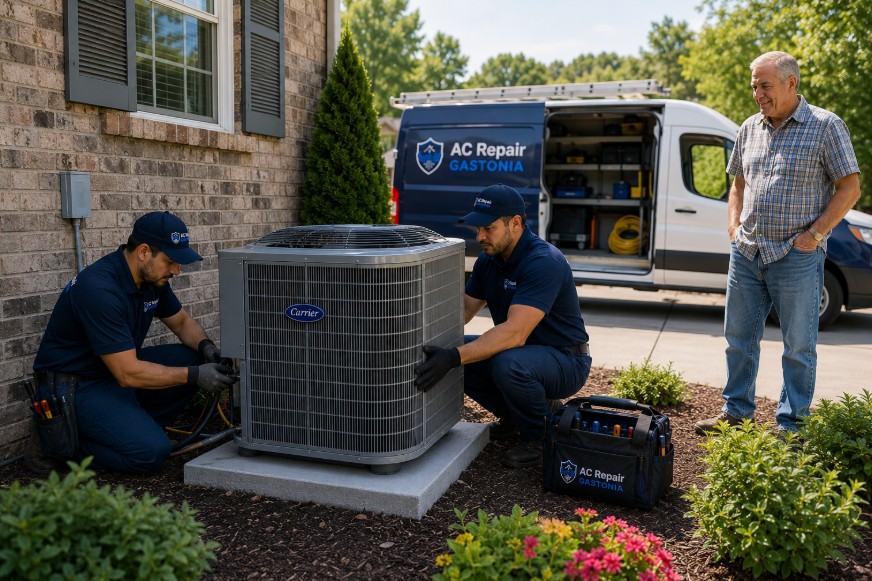
AC Installation in Gastonia, NC
Need a new air conditioner or replacing an older system that can't keep up? Get professional residential AC installation in Gastonia from licensed technicians who size the system properly, explain your options clearly, and provide upfront pricing before work begins.
Signs It's Time for a New AC
in Gastonia
Not every cooling problem means you need a new system. Many issues can still be corrected with professional central AC repair, especially when the equipment is newer and the failure is limited to one component. Installation becomes worth considering when age, repair history, comfort problems, and operating costs begin pointing in the same direction.
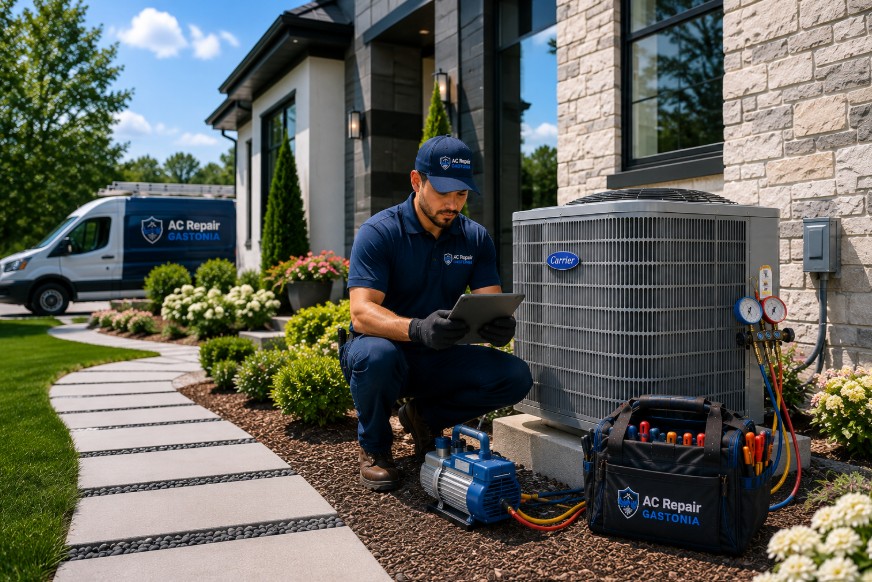
Your AC Is 15 Years Old or Older
Most residential air conditioners have a limited service life, even when they have been maintained properly. An older system may still run, but worn components, declining efficiency, and reduced cooling output can make every summer more expensive. Age alone does not require replacement, but it should be considered alongside the system's condition and repair history.
Repair Costs Keep Adding Up
One repair may be reasonable. Repeated capacitor, motor, coil, electrical, refrigerant, or compressor problems can make continued repairs harder to justify. If a major compressor repair is needed on an older system, compare the repair cost with the value and expected life of a properly sized replacement.
Your System Still Uses R-22 Refrigerant
Older AC systems may use R-22, a refrigerant that is no longer manufactured. Existing supplies can be difficult and costly to obtain, and adding refrigerant does not solve an active leak. If an older R-22 system develops a serious refrigerant leak, replacement may offer better long-term value than continuing to invest in outdated equipment.
Cooling Is Uneven Throughout the House
Bedrooms may stay warm while other rooms become too cold, or the upstairs may never reach the thermostat setting. Uneven cooling can come from ductwork, airflow, insulation, or equipment problems, so diagnosis should come first. When the system is also old or incorrectly sized, new AC installation may be part of the right solution.
Your Energy Bills Keep Rising
Higher Duke Energy bills do not automatically mean the AC must be replaced, but an aging system may use more electricity as it loses efficiency. Longer cycles, weak cooling, dirty components, and worn motors can all increase energy use. Compare recent bills with the system's performance before deciding whether another repair makes financial sense.
The AC Runs Constantly Without Cooling Effectively
An air conditioner that rarely shuts off but still cannot maintain a comfortable temperature may be undersized, worn out, low on refrigerant, or dealing with restricted airflow. Continuing to run it under those conditions adds wear without solving the comfort problem. A full assessment can determine whether repair is still practical or whether replacement is the better next step — beginning with AC repair if the equipment warrants it.
The decision should be based on the whole system, not one symptom. Equipment age, repair cost, refrigerant type, energy use, airflow, and overall comfort all matter when deciding whether to repair the existing AC or plan a new installation.
AC Systems We Install in
Gastonia Homes
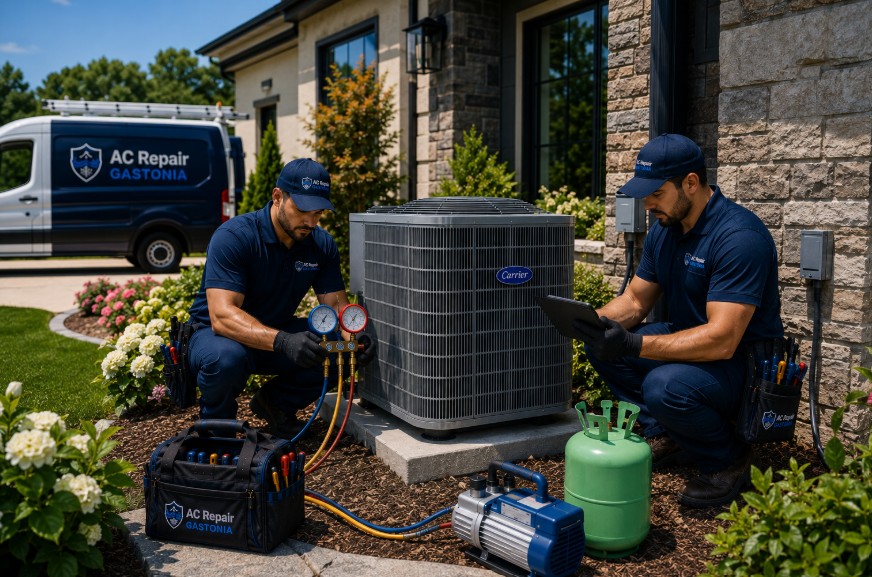
The right cooling system depends on the home's layout, existing ductwork, comfort problems, and how the equipment will handle Gastonia's hot, humid summers. We explain the differences clearly so homeowners can compare practical options without being pushed toward equipment that does not fit the property.
Central Air Conditioning
Central air conditioning is the most common choice for Gastonia homes that already have usable ductwork. One outdoor condenser works with an indoor coil and blower to distribute cooled air throughout the house.
A successful central AC installation depends on correct system sizing, equipment matching, airflow, duct condition, refrigerant charge, and thermostat setup. Simply replacing the outdoor unit without checking the rest of the system can lead to uneven cooling, high humidity, and premature wear.
Ductless Mini-Split Systems
Ductless mini-splits work well in homes without existing ductwork, converted garages, sunrooms, additions, upstairs rooms, and spaces that never cool evenly. Each indoor unit controls a specific area, giving homeowners more control over room-by-room comfort.
Mini-split installation requires proper equipment placement, line-set routing, drainage, electrical connections, and system commissioning. The system should be selected based on the size and heat load of each space, not just the room's square footage.
Heat Pump Systems
A heat pump provides both cooling and heating from one system, making it a practical option for North Carolina's hot summers and generally mild winters. During summer, it operates much like a standard central air conditioner by moving heat out of the home.
Heat pump installation requires accurate sizing and proper setup because the system runs during both cooling and heating seasons. Homeowners should also understand how auxiliary heat, thermostat controls, and seasonal efficiency affect comfort and operating costs.
No system type is automatically right for every home. Before recommending central air, a ductless system, or a heat pump, the home's layout, ductwork, insulation, comfort needs, and existing equipment should be evaluated together.
How Our AC Installation
Process Works in Gastonia
A reliable AC installation starts before the new equipment arrives. The system must fit the home, work with the existing ductwork and electrical setup, and be installed according to manufacturer requirements. Each step below helps prevent comfort problems, excessive humidity, high energy use, and early equipment wear.
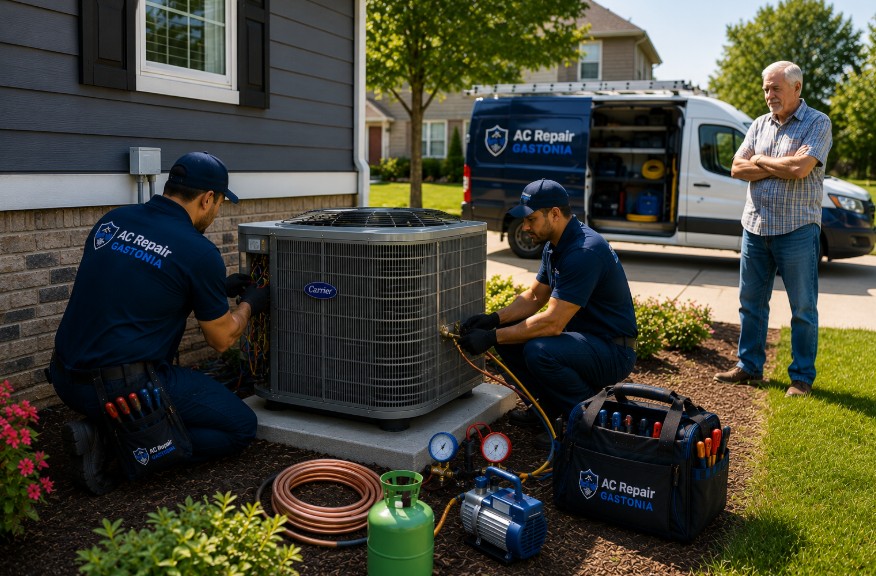
Home Assessment and Load Calculation
We begin by evaluating the home's size, layout, insulation, windows, sun exposure, existing ductwork, and current comfort problems. A load calculation helps determine how much cooling the house actually needs instead of relying only on the size of the old unit.
This matters in Gastonia because an AC system must remove both heat and indoor humidity. An oversized system may cool too quickly without controlling moisture, while an undersized system may run continuously and still fall behind.
System Selection and Clear Recommendation
Once the cooling load is understood, we compare system types, efficiency ratings, equipment configurations, and practical options for the home. The recommendation should reflect the property's needs and the homeowner's budget rather than pushing the largest or most expensive unit.
We also explain what equipment is being installed, what is included in the project, and whether any ductwork, electrical, drain, thermostat, or equipment-pad work is needed.
Scheduling and Pre-Installation Preparation
Before installation day, the work area, equipment access, and project requirements are reviewed. Homeowners should know where the technicians need access, whether attic or crawlspace entry is required, and how long the existing cooling system may be unavailable.
The new indoor and outdoor equipment should also be confirmed as a properly matched system before installation begins.
Professional Equipment Installation
The old equipment is disconnected and removed carefully when the project involves replacement. The new condenser, indoor coil or air handler, refrigerant lines, condensate drain, electrical connections, thermostat controls, and safety components are then installed or connected as required.
Equipment placement matters. The outdoor unit needs proper clearance and a stable base, while indoor components must be positioned for airflow, drainage, maintenance access, and safe operation.
Refrigerant, Airflow, and System Testing
After installation, the system is started and tested under operating conditions. Refrigerant charge, supply-air temperature, return airflow, static pressure, condensate drainage, electrical readings, thermostat response, and equipment cycling should all be checked.
The goal is not simply to make the unit turn on. The full system should cool evenly, drain correctly, operate within manufacturer specifications, and respond properly to the thermostat.
Homeowner Walkthrough
Before the installation is considered complete, we explain how to operate the thermostat, change the filter, recognize normal system behavior, and care for the equipment. Homeowners should also receive clear information about the installed system, warranty registration requirements, and recommended maintenance.
This walkthrough gives the homeowner a chance to ask questions while the equipment and installation details are still fresh.
A professional installation should leave the home with dependable cooling, balanced airflow, and equipment that is set up for the way the house actually operates. Careful sizing, correct installation, and complete testing matter just as much as the brand name on the unit.
What Does AC Installation
Cost in Gastonia, NC?
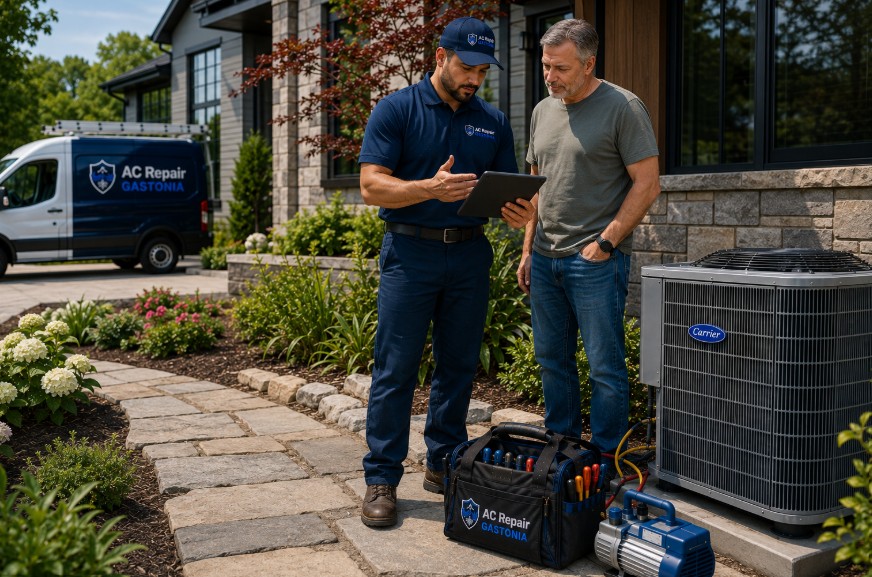
The cost of AC installation in Gastonia depends on the size of the home, the type of system being installed, equipment efficiency, ductwork condition, and how difficult the equipment is to access. A straightforward replacement using existing ductwork will usually cost less than a project that needs duct changes, electrical updates, drain work, or equipment relocation.
This range generally applies to a residential central air conditioner replacement that includes properly matched indoor and outdoor cooling equipment. The final cost depends on capacity, efficiency level, installation requirements, and whether the existing ductwork and electrical setup can be reused safely.
A full HVAC replacement may include both cooling and heating equipment, along with the indoor coil, air handler or furnace connection, thermostat, refrigerant lines, drain setup, and required installation materials. Heat pump systems and more advanced equipment configurations may also fall within or above this range depending on the home.
Home Size and Cooling Load
Larger homes usually need more system capacity, but square footage is not the only factor. Ceiling height, windows, insulation, sun exposure, room layout, and air leakage all affect how much cooling the home requires.
System Type
Central air conditioning, ductless mini-splits, and heat pump systems have different equipment and installation requirements. A multi-zone ductless system may require several indoor units, while a central system depends more heavily on existing ductwork.
SEER2 Efficiency Rating
Higher-efficiency systems generally cost more upfront because they use more advanced equipment and controls. The right efficiency level should balance installation cost, expected energy use, comfort, and how long the homeowner plans to stay in the property.
Ductwork Condition
Existing ducts may need sealing, resizing, repair, or replacement if they are leaking, damaged, poorly designed, or too small for the new system. Installing new equipment on bad ductwork can leave the homeowner with the same airflow and comfort problems.
Equipment Location and Access
Equipment located in a tight attic, crawlspace, closet, or difficult outdoor area may require more labor than an installation with open access. Relocating equipment, modifying platforms, or creating safer service access can also affect cost.
Electrical, Drain, and Refrigerant-Line Work
Some installations need electrical upgrades, a new disconnect, drain modifications, line-set replacement, thermostat wiring, or a new equipment pad. These details should be identified during the home assessment rather than appearing as surprises after installation begins.
These figures are general planning ranges, not guaranteed prices. Every Gastonia home is different, so the most accurate cost comes from an in-home assessment, proper system sizing, and a written estimate that clearly explains what is included.