
Carrier AC Repair in Gastonia, NC
Carrier AC not cooling, not turning on, or showing fault indicators? Get clear diagnostics from licensed, certified technicians who understand Carrier Comfort, Performance, and Infinity systems.
Professional Carrier AC Repair
in Gastonia, NC
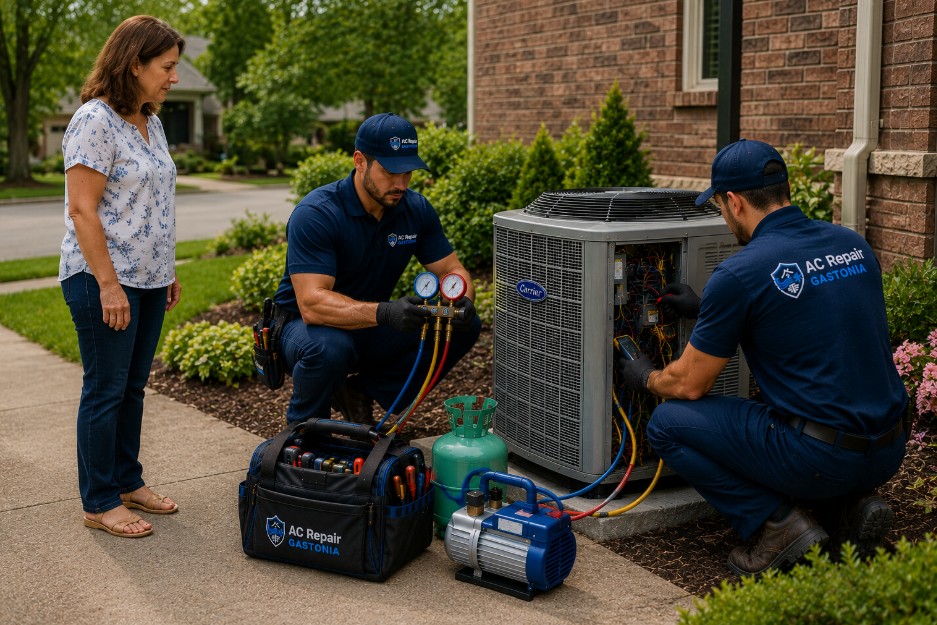
For homeowners who need help from AC Repair Gastonia, our Carrier AC repair in Gastonia, NC service is built for Carrier systems that are not cooling, not starting, short cycling, freezing up, or showing fault indicators during normal operation.
Carrier systems are not all the same. A Comfort Series unit, a Performance Series unit, and an Infinity Series system can have different controls, compressor setups, thermostat communication, and diagnostic behavior. A proper repair starts with knowing which Carrier system is in the home — not just seeing the Carrier badge on the outdoor cabinet.
Our diagnostic process looks at the full cooling system: outdoor unit performance, indoor coil condition, refrigerant behavior, thermostat communication, electrical components, airflow, and any fault indicators. If the issue connects to a larger central AC repair concern, the homeowner should understand that before approving any work.
Common Carrier AC Problems
We Diagnose & Repair
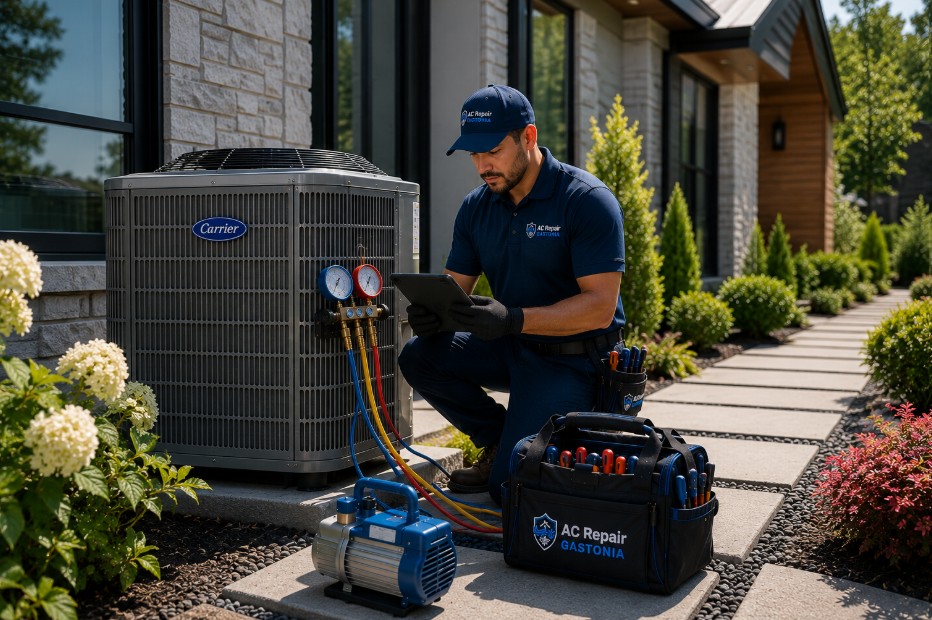
Carrier AC problems can look simple from inside the house, but the real cause is not always obvious. A system that feels weak, runs too long, or will not start may have an electrical issue, refrigerant problem, airflow restriction, thermostat fault, or compressor-related failure.
Carrier AC Not Cooling Properly
If a Carrier AC is running but not cooling the house, the issue may be low refrigerant, dirty coils, weak airflow, a struggling blower motor, or compressor strain. A proper diagnosis checks temperature split, airflow, outdoor unit operation, refrigerant behavior, and electrical load before recommending repair. Learn more about a Carrier AC running but not cooling.
Carrier Infinity or Performance Fault Codes
Carrier Infinity and some Performance systems may show fault indicators, flashing lights, or displayed fault numbers when the system detects a problem. The code helps narrow the search, but it does not always confirm the failed part. The thermostat, indoor unit, outdoor unit, wiring, airflow, and system response still need to be tested together.
Carrier AC Won't Turn On
When a Carrier AC will not start, the issue may involve a failed capacitor, contactor, control board, breaker, outdoor disconnect, or thermostat communication problem. Resetting the breaker over and over is not a repair. The system needs to be checked safely so the real startup failure is found. Read more about a Carrier AC won't turn on.
Capacitor or Contactor Failure
A weak capacitor can make a Carrier outdoor unit hum, click, start slowly, or fail to start at all. A bad contactor can stop power from reaching the outdoor components correctly. These repairs are common, but the part should be tested before anything is replaced.
Refrigerant Leak or Low Refrigerant
Low refrigerant can cause poor cooling, longer run times, frozen coils, and added compressor strain. Refrigerant does not get used up during normal operation, so a low charge usually means there is a refrigerant leak somewhere in the system. Refrigerant work should be handled by an certified technician.
Frozen Evaporator Coil
A frozen Carrier coil may come from restricted airflow, low refrigerant, a dirty filter, blower trouble, or a dirty indoor coil. Homeowners may notice weak airflow, ice on the line set, or the system running without cooling properly. The coil needs to thaw, but the real cause still has to be found.
Compressor Stress or Failure
The compressor is one of the most important and expensive parts of a Carrier AC system. If it is overheating, short cycling, drawing high amperage, or struggling to start, the repair decision needs careful testing. We check refrigerant condition, electrical load, capacitor performance, airflow, and system age before discussing compressor repair.
Carrier AC Not Cooling in Gastonia —
Troubleshooting & What It Means
When a Carrier AC is running but the house is not getting cool, the problem can come from more than one place. The outdoor unit may be on, the blower may be moving air, and the thermostat may look normal — but the system can still be losing cooling performance because of airflow, refrigerant, coil, or compressor issues.
Low Refrigerant or Refrigerant Leak
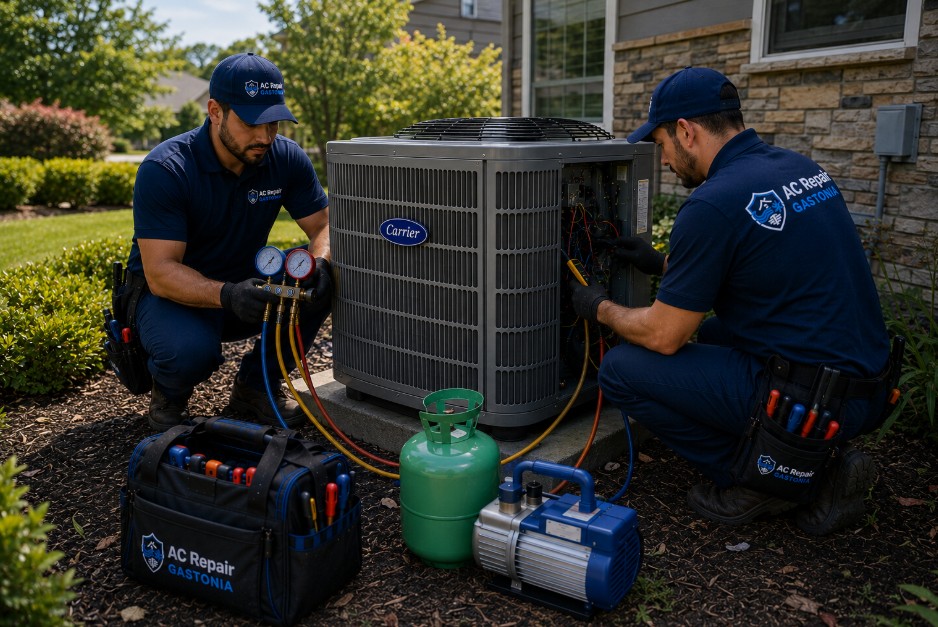
If a Carrier system is low on refrigerant, the air from the vents may feel warmer than normal and the system may run longer without reaching the set temperature. Refrigerant does not get used up during normal operation, so low refrigerant usually points to a refrigerant leak somewhere in the system. This is not a homeowner-safe repair because refrigerant work requires proper tools and certified handling.
Dirty Evaporator or Condenser Coils
Dirty coils make it harder for the system to absorb heat inside the home or release heat outside. A Carrier AC may still run, but cooling performance drops because heat transfer is restricted. A homeowner can check for obvious outdoor debris around the condenser, but coil cleaning and deeper inspection should be handled carefully.
Restricted Airflow
A clogged filter, blocked return, closed vents, or weak blower can make a Carrier AC feel like it is not cooling even when the refrigerant side is working. You may notice weak airflow from vents, uneven room temperatures, or longer cooling cycles. Homeowners can check the filter and make sure returns are not blocked, but persistent airflow problems need diagnosis.
Frozen Evaporator Coil
A frozen coil can stop a Carrier system from cooling properly and may cause weak airflow, ice on the line set, or water around the indoor unit after thawing. Freezing can happen because of low refrigerant, restricted airflow, a dirty coil, or blower issues. If the system freezes, turning it off and scheduling service is safer than forcing it to keep running.
Compressor Strain or Weak Performance
The compressor moves refrigerant through the system, so weak compressor performance can make a Carrier AC run without cooling the home properly. Signs may include long run times, warm air, short cycling, or the outdoor unit sounding strained. This requires technician testing because compressor problems can overlap with capacitor, refrigerant, and electrical issues.
Running a Carrier AC that is not cooling properly can increase energy use and put extra stress on the compressor, blower motor, and outdoor components. If the system keeps running but the house stays warm, schedule service before a smaller cooling problem turns into a larger repair. Learn more about AC not cooling properly.
Schedule Service →
Carrier AC Repair Cost in Gastonia —
What to Expect
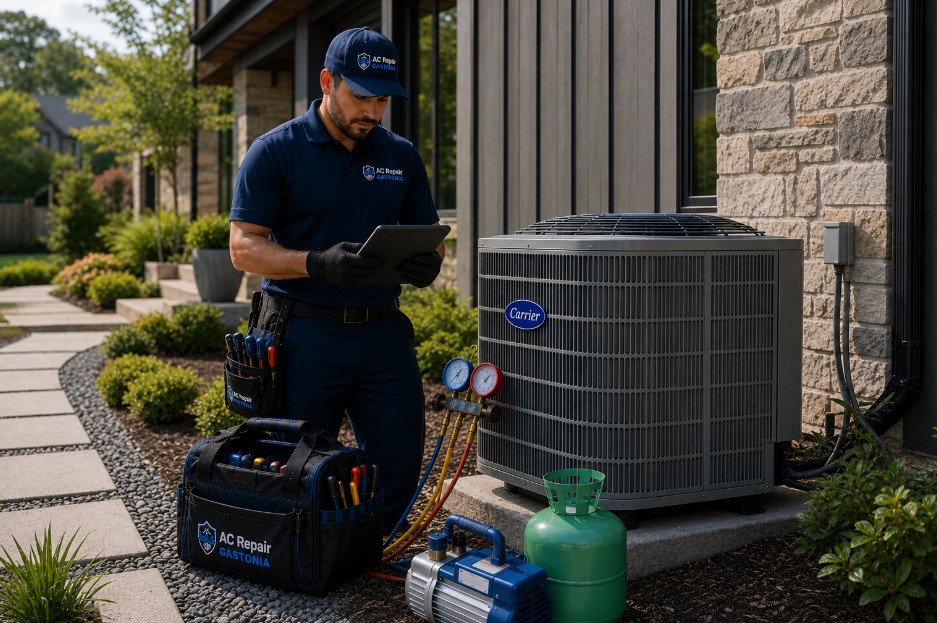
Carrier AC repair cost depends on what failed, which Carrier model is in the home, the refrigerant type, system age, and whether the issue is limited to one part or connected to a larger cooling problem. A Comfort Series unit with a bad capacitor is a very different repair than an older R-22 system with a weak compressor or refrigerant loss.
Before any repair begins, the homeowner should receive a written estimate explaining the problem, the recommended repair, and the expected cost.
A diagnostic visit identifies why the Carrier AC is not cooling, not starting, short cycling, freezing up, or showing fault behavior. The technician checks thermostat response, electrical components, airflow, outdoor unit operation, and refrigerant conditions.
A weak capacitor can make a Carrier outdoor unit hum, click, delay startup, or fail to start. This is one of the more common AC repairs, but the part still needs to be tested before replacement.
A failed contactor can stop power from reaching the outdoor unit correctly. Symptoms may include the outdoor unit not starting, intermittent operation, or the system responding inconsistently.
If the Carrier system is low on refrigerant, the leak source should be checked before refrigerant is added. Refrigerant type matters, especially if the unit is older and uses R-22 instead of R-410A. See more about refrigerant leak repair.
A weak blower motor can reduce airflow, cause uneven cooling, and make the AC run longer than it should. Carrier variable-speed systems may require more careful diagnosis than basic single-speed equipment.
Basic thermostat replacement is usually straightforward, but Carrier Infinity controls can cost more because they communicate with the system differently than standard thermostats.
Dirty evaporator coils can reduce cooling performance, restrict airflow, and contribute to freezing. Cleaning cost depends on access, buildup, and whether the coil needs deeper inspection.
The compressor is one of the most expensive parts of a Carrier AC system. If compressor replacement is being considered, it is also time to compare the repair cost against system age, refrigerant type, and replacement value.
Repair vs. Replace
If the compressor repair approaches 50% of the cost of a new system and the Carrier unit is 10+ years old, replacement may be worth discussing. That does not mean replacement is always the answer. It means the full system condition should be reviewed before putting major money into an older unit.
These ranges are general estimates, not guaranteed pricing. The right number comes after the system is inspected and the repair is explained in writing.
Request an Estimate →
Emergency Carrier AC
Repair in Gastonia
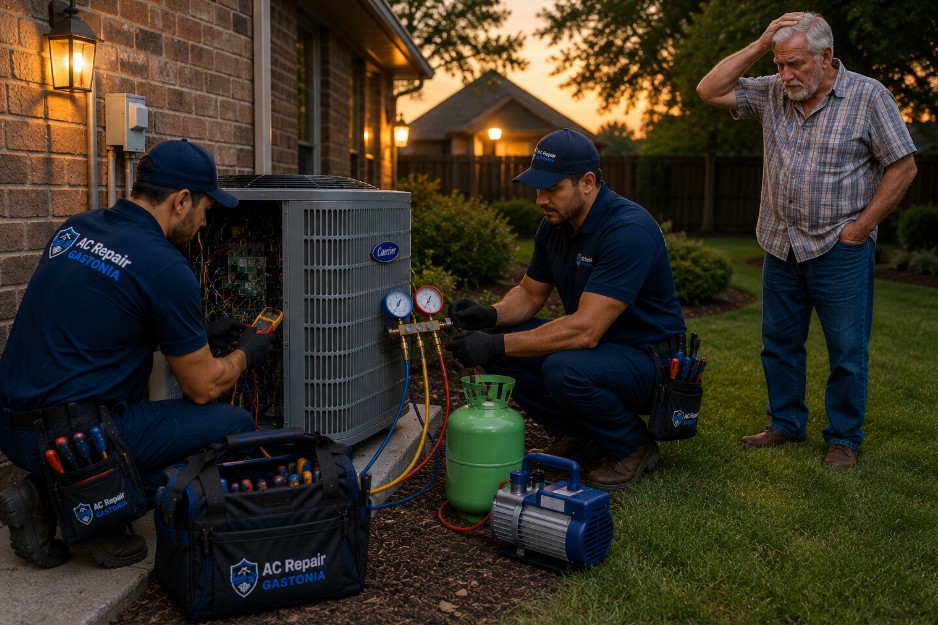
A Carrier AC problem becomes urgent when the system stops cooling completely, trips the breaker, gives off a burning smell, freezes over with little or no airflow, or goes into a hard lockout on an Infinity system. During Gastonia's hot and humid weather, a full cooling failure can make the house uncomfortable fast and put extra strain on the equipment if it keeps trying to run.
If your Carrier system has stopped working, our Emergency AC Repair service helps homeowners get a fast diagnosis without guessing at parts. We check the thermostat, electrical components, outdoor unit, airflow, refrigerant condition, and fault behavior before recommending the repair.
When a Carrier AC Failure Becomes Urgent
A failing Carrier system can create secondary damage when it keeps running under the wrong conditions. Low refrigerant can overload the compressor, voltage problems can damage motors and controls, and a frozen coil can lead to water issues once it starts thawing. Learn more about compressor damage and why catching a failure early matters.
Urgent Carrier AC issues we handle
- Carrier AC stopped cooling completely
- Carrier Infinity system showing lockout behavior
- Outdoor unit humming but not starting
- Breaker trips when the AC tries to run
- Burning smell near the indoor or outdoor unit
- Ice forming on the refrigerant line with weak airflow
- System running but indoor temperature keeps rising
Same-day service may be available depending on schedule and location. If your Carrier AC is down and the home is heating up, schedule service so the system can be inspected before the problem gets worse.
Schedule Service →
Carrier AC Models
We Repair in Gastonia
Carrier makes several residential AC system tiers, and each one behaves differently when something goes wrong. A proper repair starts by identifying the model type, control setup, refrigerant type, and how the system is responding before replacing parts.
Carrier Infinity Series
Carrier Infinity systems are often variable-speed or communicating systems that work with Carrier Infinity Control thermostats. When something fails, the thermostat, indoor unit, outdoor unit, and control wiring may all communicate fault information together. These systems need careful diagnosis because the issue may be in the equipment, the controls, the communication wiring, airflow, or refrigerant behavior.
Carrier Performance Series
Carrier Performance systems may use single-stage or two-stage cooling depending on the model. They are usually more straightforward than Infinity systems, but they still need proper electrical testing, refrigerant evaluation, airflow checks, and thermostat response testing. If a Performance Series unit is short cycling, not cooling, or struggling to start, the diagnosis should cover the full system.
Carrier Comfort Series
Carrier Comfort Series units are common in many residential homes because they are practical, single-stage systems. Older Comfort Series equipment may use R-22 refrigerant, which is no longer manufactured, so refrigerant type can affect the repair decision. For newer Comfort systems, many repairs are straightforward when the problem is isolated to a capacitor, contactor, fan motor, thermostat, or airflow issue.
Carrier AC Repair Serving
Gastonia and Gaston County
Carrier AC repair is available for residential homes throughout Gastonia and surrounding Gaston County communities, including Belmont, Bessemer City, Cramerton, Dallas, Lowell, Mount Holly, Stanley, and nearby areas. Gastonia summers bring long cooling cycles, high humidity, and steady demand on residential AC systems, so local experience matters when diagnosing Carrier units that are not cooling, short cycling, freezing up, or struggling to keep up.
Carrier systems are found in many types of Gaston County homes — from older Comfort Series units in established neighborhoods to newer Performance and Infinity systems in more recent builds. That mix matters because system age, refrigerant type, thermostat setup, and model tier can change the repair approach.
Areas Served
Gastonia
Residential Carrier AC repair for cooling issues, startup failures, airflow problems, refrigerant concerns, thermostat faults, and central AC system performance problems.
Belmont
Carrier AC service for homes dealing with warm air, long run times, short cycling, frozen coils, and weak cooling during humid weather.
Bessemer City
Carrier diagnostics for systems that will not turn on, stop cooling properly, or show signs of electrical, refrigerant, or compressor-related trouble.
Cramerton
Repair support for Carrier Comfort, Performance, and Infinity systems with thermostat communication issues, airflow problems, and outdoor unit failures.
Dallas
Carrier AC repair for homes with cooling interruptions, weak airflow, frozen coils, and system performance problems during warmer months.
Lowell
Residential Carrier service for AC units that keep running without reaching the set temperature or fail to start when cooling is needed.
Mount Holly
Carrier AC diagnostics for warm air, refrigerant loss, compressor strain, thermostat issues, strange noises, and cooling system shutdowns.
Stanley
Carrier AC repair for homeowners dealing with poor cooling, startup trouble, system lockouts, or older Carrier units that need careful repair evaluation.
Surrounding Gaston County Communities
If your Carrier AC is not keeping your home comfortable in Gaston County, the right repair starts with a full system check and a clear explanation of what is actually wrong.
Carrier AC Repair vs. Replacement —
What Makes Sense in Gastonia
Deciding between Carrier AC repair and replacement is not always simple, especially when the repair involves a compressor, refrigerant issue, or an older system that has already needed service more than once. The right choice depends on the age of the unit, refrigerant type, repair cost, warranty status, and how well the system has been cooling the home overall.
Comparison Guide
When Repair Makes Sense
- Repair is usually worth considering when the Carrier system is under 10 years old and the issue is limited to one failed part.
- A capacitor, contactor, thermostat issue, fan motor problem, or coil cleaning can often be handled without replacing the full system.
- If the unit uses R-410A refrigerant and the rest of the system is in good condition, repair may still be the practical choice.
- A Carrier Comfort, Performance, or Infinity system that has been reliable until recently may only need a targeted repair.
- A written estimate should make the repair cost clear before the homeowner decides.
When Replacement May Be the Better Option
- Replacement may be worth discussing when the Carrier system is 12–15+ years old and repair costs are becoming more frequent.
- If the compressor is failing and the repair cost approaches 50% of a new system, spending more money on the old unit may not make sense.
- Older Carrier systems using R-22 refrigerant can be harder and more expensive to service because R-22 is no longer manufactured.
- If the system has refrigerant loss, weak cooling, airflow issues, and electrical problems at the same time, the repair may not solve the bigger comfort issue.
- A system that keeps breaking down every cooling season may cost more to keep alive than it is worth long-term.
A good repair-or-replace conversation should not feel like a sales pitch. It should start with the condition of the Carrier system, the cost of the repair, the age of the equipment, and whether the repair will actually restore dependable cooling for the home.