
AC Recharge in Gastonia, NC
If your home AC is running but not cooling right, AC Repair Gastonia checks the charge, looks for leaks, and recharges your system to manufacturer specs — so the fix holds, not just for a few weeks.
· Licensed HVAC Contractor · Certified Refrigerant Handling
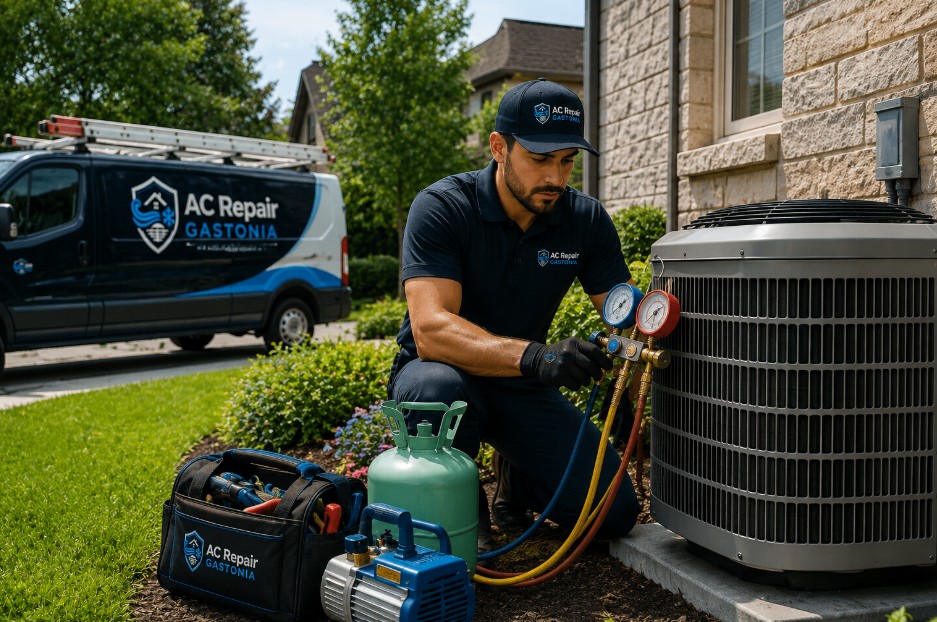
What Does an
AC Recharge Actually Do?
For homeowners searching for AC recharge Gastonia NC, the first thing to know is simple: refrigerant does not get used up in a working air conditioner. Your AC Recharge in Gastonia, NC service should start with diagnosis, and AC Repair Gastonia checks why the system is low before adding anything.
Refrigerant is what lets your home AC pull heat and humidity out of the indoor air. When the charge drops, your house may feel warm even while the system keeps running. Cooling cycles get longer, rooms feel sticky, and your Duke Energy bill can climb because the unit has to work harder to do the same job.
A proper recharge means checking the charge level, confirming the correct refrigerant type, locating the leak source, and adding refrigerant to manufacturer specs — not just topping it off until next season.
The system runs but the air coming out never feels cold — refrigerant is what makes the cooling happen.
The unit works harder and longer trying to hit the thermostat setting — and your energy bill reflects it.
Low charge causes the evaporator coil to freeze over, which can block airflow and damage the compressor.
Most common refrigerant in Gastonia residential systems. Standard availability and recharge cost.
No longer manufactured under federal phase-out rules. Significantly more expensive to source. Ask about system age.
Do not treat a recharge like a quick refill. If the system is low, refrigerant escaped somewhere. Fixing that reason first is what keeps the repair from turning into the same problem again next summer.
6 Signs Your Gastonia Home AC
May Be Low on Refrigerant
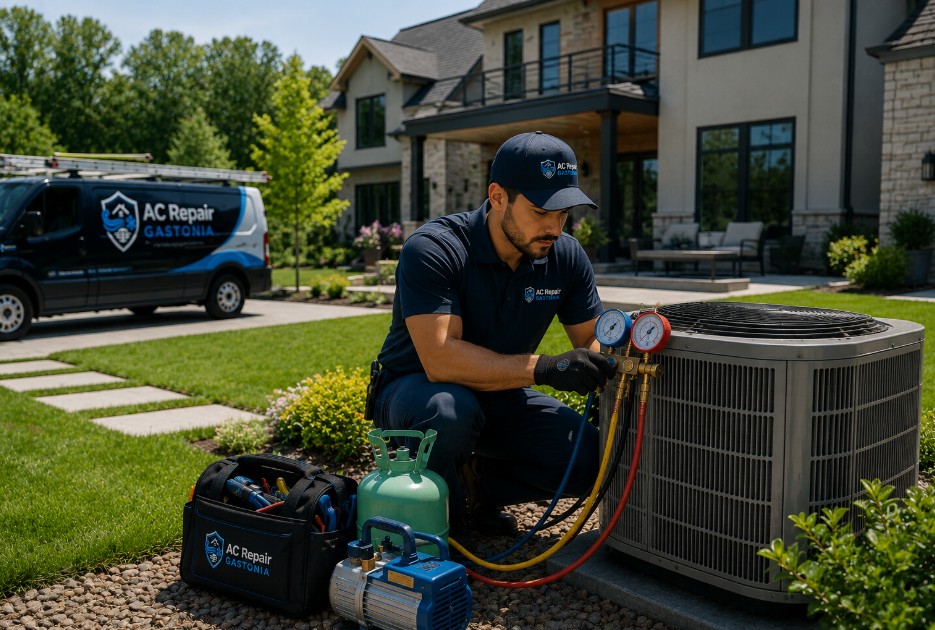
Changes Everything
If the AC is running but the air coming from the vents feels warm or room temperature, low refrigerant may be one reason. Without enough refrigerant, the system cannot pull heat out of your indoor air the way it should.
A low charge can make the system run longer before it reaches the thermostat setting. In Gastonia's summer humidity, this can make the home feel slow to cool even when the equipment never shuts off.
Low refrigerant can cause pressure changes inside the system, which may lead to freezing on the refrigerant line or indoor coil. If you see ice, turn the system off and schedule diagnosis before more damage happens.
When refrigerant is low, the AC has to work harder to move heat out of the house. If your Duke Energy bill jumps without a thermostat change, the system may be running longer because it cannot cool efficiently.
A properly charged AC removes both heat and moisture from the air. If the house feels sticky even while the system runs, the AC may not be staying cold enough at the coil to control humidity well.
If the AC runs for hours but the home never feels comfortable, low refrigerant could be part of the problem. The system may keep trying to cool, but it cannot reach the set temperature with an undercharged circuit.
These symptoms can also overlap with other AC problems, including airflow restrictions, thermostat issues, or a failing part. That is why AC Repair Gastonia diagnoses the system first and only recommends an AC recharge when the refrigerant charge is actually low.
How We Handle
AC Recharge in Gastonia
Work starts with measuring the supply air temperature coming from the vents and comparing it against what the system should produce given current outdoor conditions. This tells whether the AC is truly underperforming or whether another issue — airflow restriction, thermostat setting, or a dirty coil — is the actual cause of discomfort. A recharge should never be guessed from warm air alone.
High-side and low-side refrigerant pressures are checked next. These readings show whether the system is below manufacturer charge specifications and help narrow down what is happening inside the refrigerant circuit. Pressure readings also indicate whether the problem points toward low refrigerant, a restriction, or another mechanical issue — before any refrigerant is touched.
Before refrigerant is added, the technician looks for the reason the charge dropped. Common leak points include coil connections, Schrader valves, fittings, refrigerant lines, and evaporator coil areas. When the leak is not visible, electronic leak detection may be used to locate the source more accurately.
Once the leak issue is addressed, the system is recharged with the correct refrigerant type and weight listed by the manufacturer. If a part needs repair or replacement, that work is completed before refrigerant is added. The system must hold pressure properly before the recharge is finished.
After the recharge, supply air temperature is re-measured, the compressor cycle is confirmed, and the system is checked to make sure it is cooling steadily. The homeowner receives a written service record showing what was checked, what was found, and what work was completed.
You will know the result before we leave your driveway.
What Determines AC Recharge Cost
in Gastonia, NC?
One of the most common questions we hear is how much an AC recharge costs. The honest answer is that no two systems are exactly alike. The refrigerant type, how much refrigerant has been lost, whether a leak needs repair, and the diagnostic work required all affect the final estimate.
Most Gastonia homes built after 2000 use R-410A refrigerant, which is the simpler and more readily available option in most cases. Older systems may use R-22, which is no longer manufactured under federal phase-out rules. Because of its limited supply, R-22 is often the single biggest factor affecting refrigerant recharge cost when an older system is involved.
Air conditioning systems are charged by refrigerant weight, not by time spent on the job. The amount needed depends on how much refrigerant has escaped and how long the leak has been present. A system that is only slightly below specification requires less refrigerant than one that has been operating low for an entire cooling season.
A recharge without a leak repair is the simplest scenario, but that is not always what the technician finds. If refrigerant is escaping through a Schrader valve, fitting, line connection, or coil component, that repair becomes part of the job. While extensive coil damage can increase repair scope, many leaks are identified and corrected during the same visit.
Before refrigerant is added, the system needs to be properly tested. Most HVAC companies in Gastonia charge for the diagnostic process because pressure testing, system evaluation, and leak detection take time. At AC Repair Gastonia, homeowners receive a written estimate before any repair or recharge work begins so they know exactly what has been recommended.
The most accurate way to determine what your specific system needs is a professional diagnostic visit. Once testing is complete, a written estimate is provided before any refrigerant is added or repair work is performed.
A Recharge Without a Leak Check
Is Not a Real Repair
A lot of homeowners have been through this before. The AC gets warm, someone adds refrigerant, the house feels better for a few weeks, and then the same problem comes back.
Refrigerant does not naturally disappear from a sealed AC system. If the charge is low, it escaped somewhere. A recharge without finding that leak is temporary by definition — even if the system cools better right after the visit.
At AC Repair Gastonia, refrigerant is not treated like a quick refill. If a leak is confirmed during diagnosis, the technician handles refrigerant leak repair in Gastonia before any refrigerant is added.
This protects the homeowner from paying for the same recharge twice and protects the equipment from extra strain. Running low on refrigerant forces the compressor to work harder than it should — and that is the most expensive part of the cooling system to replace.
Why Gastonia Homeowners Use
AC Repair Gastonia for Refrigerant Service
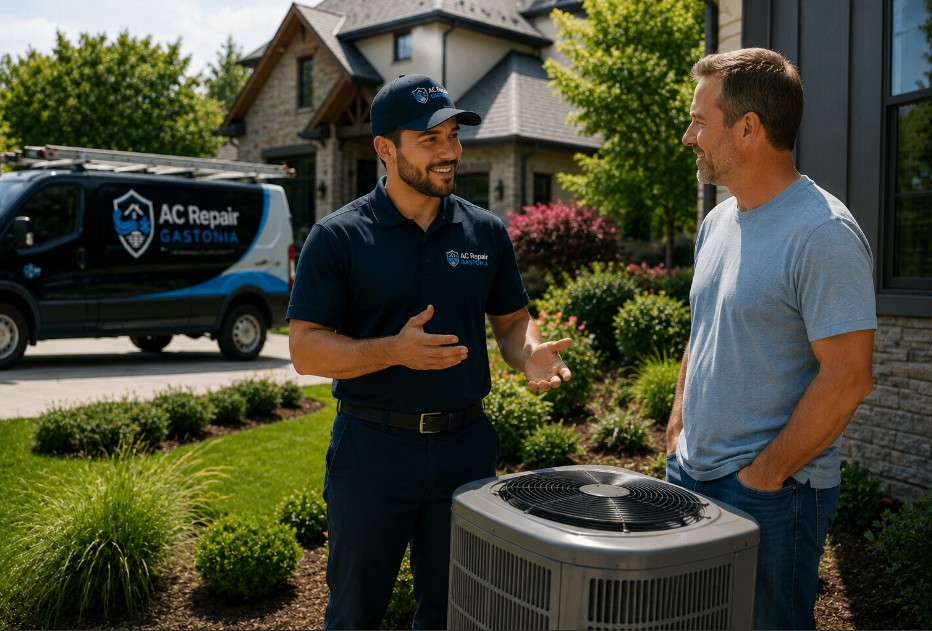
Refrigerant Specialists
Refrigerant is not added to a system that has not been checked for a leak source first. This matters because low refrigerant usually means something escaped from the system. For Gastonia homeowners with central AC systems, finding the leak first helps prevent the same cooling problem from returning weeks later.
Refrigerant work must be handled by someone with certification. That certification matters because refrigerants require proper recovery, charging, and handling under federal rules. When AC Repair Gastonia services a system, refrigerant is handled by certified technicians who know how to charge the unit safely and correctly.
Homeowners should know the cost before repair work begins. After diagnosis, AC Repair Gastonia provides a written quote that explains what was found and what needs to be done. No refrigerant is added until the homeowner approves the work.
Gastonia summers do not leave much room for waiting a week when the AC is not cooling. Most recharge and diagnosis visits are available same-day or next-day, depending on schedule availability. The goal is to find the issue quickly, explain the options clearly, and restore cooling the right way.
AC Recharge Questions —
Answered for Gastonia Homeowners
AC recharge cost depends on the refrigerant type, how much refrigerant the system needs, and whether a leak repair is required before recharge. R-410A is common in many Gastonia homes, while older R-22 systems usually cost more to service because R-22 is no longer manufactured. The right next step is a diagnostic visit, then a written estimate for your specific system.
If your AC is running but not cooling properly, low refrigerant may be one cause, but it is not the only one. Dirty coils, airflow restrictions, electrical problems, thermostat issues, or a failing part can create similar symptoms. A technician should check refrigerant pressure, temperature split, airflow, and visible system condition before recommending a recharge.
No. Home AC refrigerants such as R-410A and R-22 are regulated, and certification is required to purchase and handle them legally. Recharging a residential AC system also requires pressure readings, correct refrigerant weight, leak checks, and safe recovery practices. Guessing can damage the compressor and may create an unsafe or illegal refrigerant release.
A properly repaired and recharged AC system should hold refrigerant indefinitely, as long as no new leak develops. Refrigerant does not get used up during normal cooling. If a system is recharged without fixing the leak that caused the low charge, it may lose cooling again within weeks or months depending on the leak size.
Most newer Gastonia homes and replacement systems use R-410A refrigerant. Older systems, especially many installed before 2010, may use R-22, which many homeowners still call Freon. The refrigerant type is usually listed on the outdoor unit data plate, but the system should still be checked by a certified technician before any recharge work is performed.
It can help if low refrigerant is the reason your AC has been running longer than normal. An undercharged system struggles to move heat out of the house, which can increase runtime and raise Duke Energy bills. The recharge only helps long term if the leak is repaired and the system is charged to the correct manufacturer specification.
A standard diagnostic and recharge visit usually takes about 1–2 hours. If a leak repair is needed, it may add another 30–60 minutes depending on where the leak is located and what repair is required. If testing points to compressor-level damage or a larger component issue, AC Repair Gastonia explains that before any next step is scheduled.