
Strange AC Noises in Gastonia, NC
Buzzing, rattling, clicking, or humming sounds coming from your air conditioner aren't normal — they're early signals that something inside the system needs attention. Unusual AC noises often appear before a cooling drop or a full breakdown, making early diagnosis the straightforward path to avoiding a larger repair.
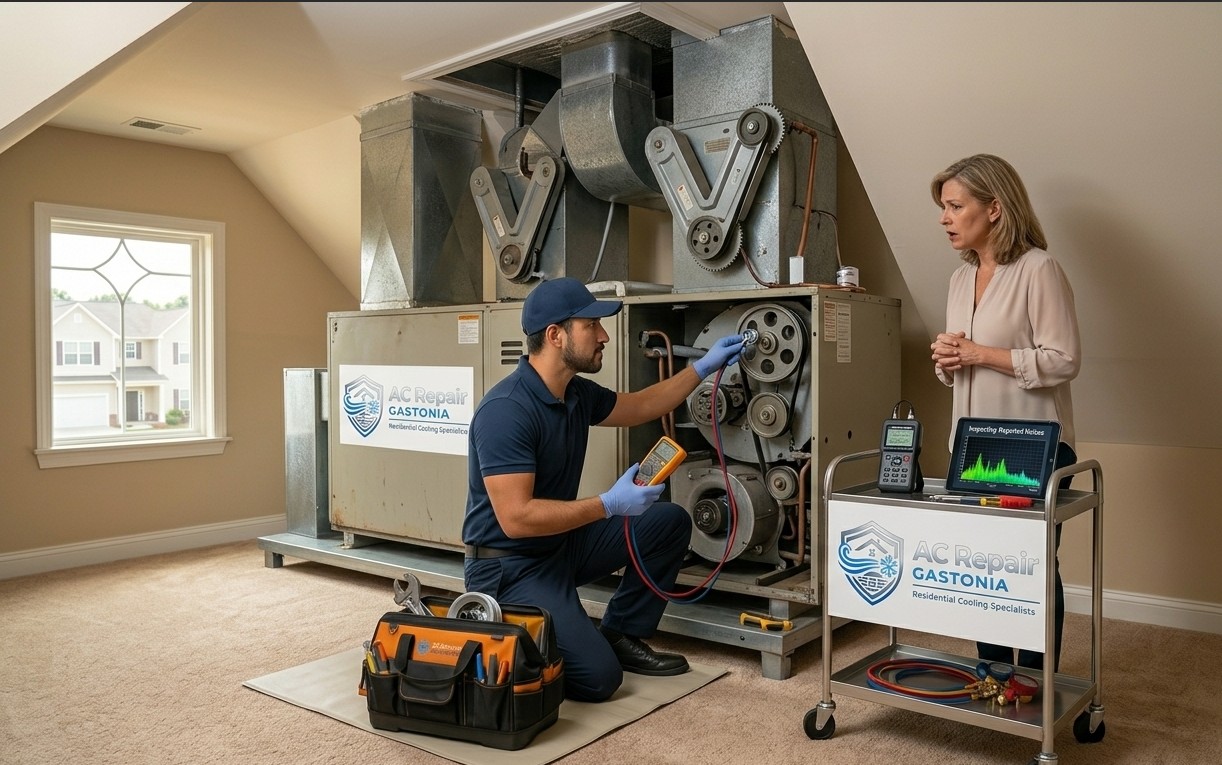
Strange AC Noises
Near Me in Gastonia, NC
When your AC is making strange noises, Gastonia AC Repair can identify what's causing them and walk you through the options before any work begins. An air conditioner that suddenly sounds different — louder, rougher, or more irregular — is usually signaling something that deserves a closer look. Most sound changes don't resolve on their own, and the underlying cause tends to become more involved the longer it runs.
Homeowners in Gastonia most often notice these sounds during startup, during normal cooling cycles, or near the indoor and outdoor units — each location and timing offers useful clues about what the system is working through. Recognizing the type of sound is a helpful first step before a technician arrives.
Hearing something unfamiliar? Most unusual AC sounds are diagnosed accurately on the first visit.
Schedule Service
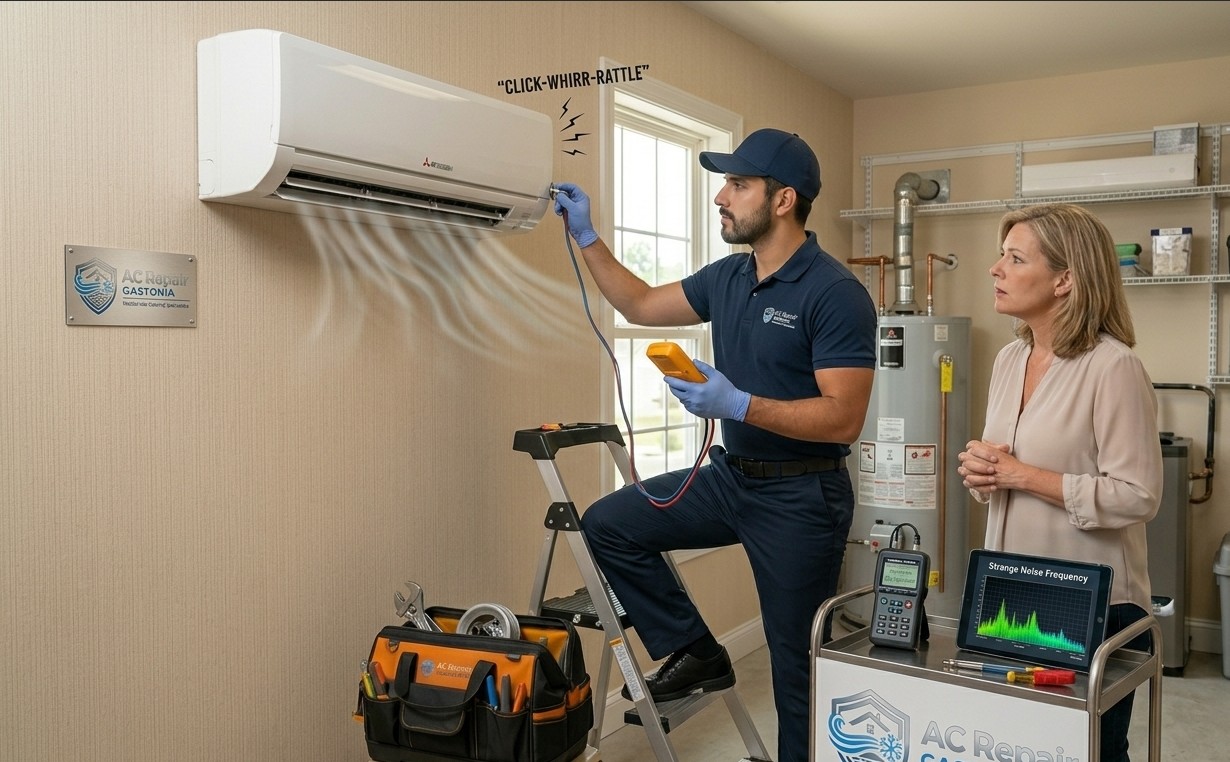
What Causes
Strange AC Noises?
Unusual AC sounds rarely appear without a reason. Each type of noise typically points toward a specific part of the system — making the sound itself a useful first clue before a technician arrives for a full diagnosis.
Loose or Vibrating Components
Rattling and banging sounds are most often caused by something that has come loose inside or around the unit — a fan blade, a panel fastener, or debris that's found its way into the outdoor cabinet. These sounds tend to be loudest during startup, when the system is working hardest. While some loose parts are straightforward to secure, a technician visit confirms nothing structural has shifted inside the system. Left unattended, loose components can cause a full system stoppage if they come into contact with moving parts.
Airflow Restrictions
High-pitched whistling or rushing air sounds typically point to restricted airflow — a heavily clogged filter, a blocked return vent, or partially closed dampers. When air is forced through a narrow opening, it creates pressure that produces noise. Beyond the sound itself, restricted airflow reduces the system's cooling capacity and can contribute to weak airflow throughout the home and eventually frozen evaporator coils. Checking and replacing the air filter is an easy first step — if the noise continues, the restriction is likely further into the system.
Compressor Strain
A loud buzzing or hard knocking sound from the outdoor unit is one of the more serious noise patterns — it often indicates the compressor is working under unusual stress. This can happen when refrigerant levels are off, electrical components are weakening, or the compressor itself is starting to wear. Compressor-related sounds tend to worsen during Gastonia's hottest days, when the system is running at full load. Early diagnosis is important: a compressor that's struggling but still functioning is far less expensive to address than one that has failed completely.
Thermostat-Related Cycling Issues
A faint clicking sound at startup or shutdown is normal — the system's contactors engaging and disengaging. But persistent clicking throughout a cycle, or rapid repeated clicking as the system short-cycles on and off, suggests the thermostat or control board may be sending incorrect signals. A malfunctioning thermostat can cause the system to start and stop far more frequently than it should, which creates unusual sounds and puts unnecessary wear on components. If your system seems to turn on and off in short bursts, a thermostat evaluation is a logical first step.
Frozen Coil or Refrigerant Flow Issues
A gurgling or hissing sound from the indoor unit — especially combined with reduced airflow or warm air from the vents — often points to a refrigerant issue or a frozen evaporator coil. As ice forms on the coil, airflow becomes restricted and the system strains to move air around the obstruction, sometimes producing an audible rushing or gurgling noise. If ice is visible on the refrigerant lines or indoor unit, the system should be shut off and a technician called — running it in this state risks compressor damage.
System Working Harder in Warmer Weather
Some AC systems become noticeably louder on Gastonia's hottest summer days — not because anything has failed, but because the equipment is running at or near its maximum output for extended periods. This kind of sustained load can amplify existing minor issues into audible sounds: a slightly worn fan bearing becomes a hum, a mildly low refrigerant charge becomes a faint gurgling. If your system is consistently louder during heat waves, it's worth a diagnostic check before the added strain causes a component to reach its limit.
Not sure which sound matches your system? Most unusual AC noises are identified and explained clearly on the first diagnostic visit — with a written estimate before any repair begins. If sounds are accompanied by a complete loss of cooling, same-day emergency service is available across Gaston County.
When To Schedule AC Repair
Unusual AC sounds don't always mean immediate failure — but they're rarely something to wait on. Most noise-related problems are significantly easier and less expensive to resolve before they affect cooling performance or damage other components. Here's a straightforward way to think about urgency.
Noise Urgency GuideA faint noise that happens once and doesn't recur may be thermal expansion or a loose panel cover. Monitor it — if it stops, no action is needed; if it recurs or gets louder, move to the next tier.
A sound that returns at every cooling cycle, grows louder over days, or happens consistently at startup or shutdown is worth a diagnostic visit. These patterns almost always have a specific cause and are straightforward to diagnose on a single call.
A loud bang, metal-on-metal screeching, or any noise that coincides with reduced cooling, visible sparks, or the system shutting off unexpectedly needs prompt attention. Turn the system off and schedule service — same-day emergency AC repair is available for situations where the system can't safely run.
Not sure which tier applies? A diagnostic visit takes the guesswork out — most AC noise causes are identified and explained on the first call.
Schedule Service
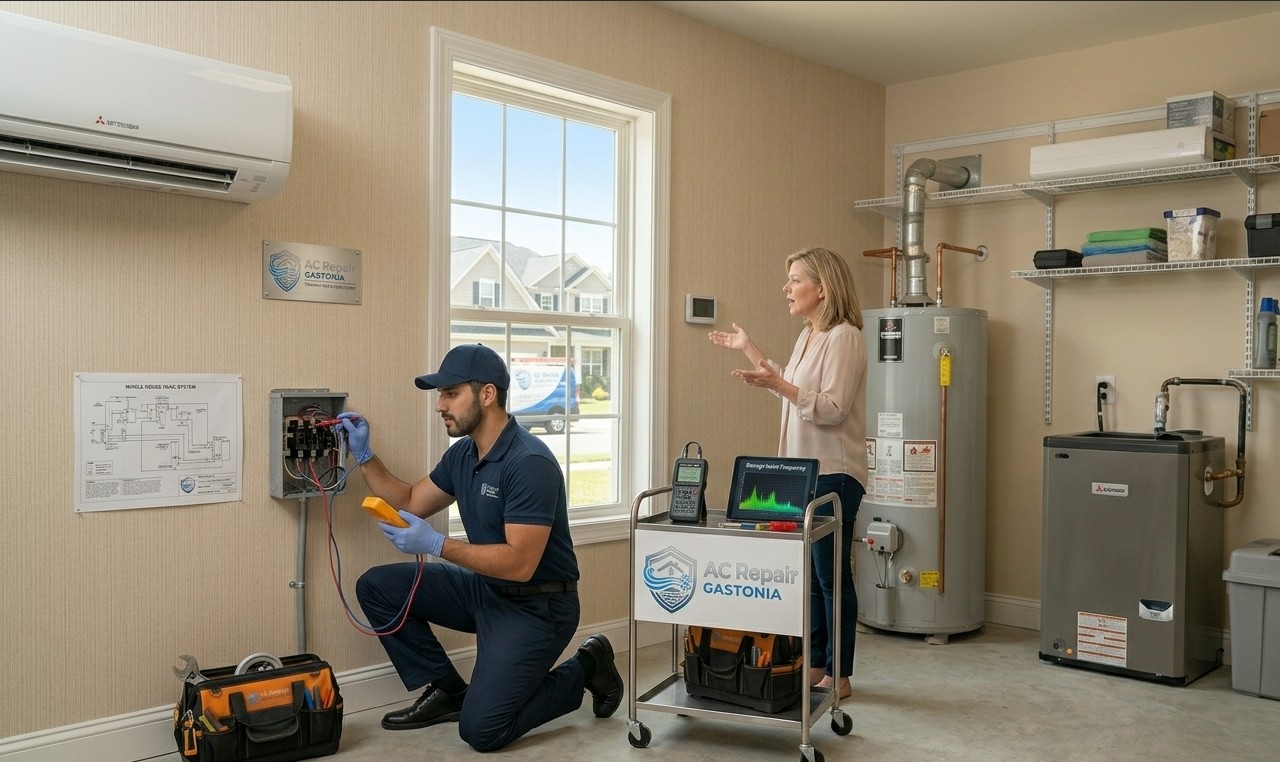
Most diagnoses resolved first visit
Strange AC Noises FAQs
Why is my AC making a buzzing noise?
AC buzzing is most commonly caused by electrical issues — a failing capacitor, a loose contactor, or arcing at the disconnect. It can also come from a refrigerant line vibrating against a panel or debris caught in the outdoor unit fan. Electrical buzzing that gets louder or occurs alongside poor cooling is worth diagnosing promptly.
What causes rattling sounds from an AC?
Rattling usually points to a loose component — a panel screw, a fan blade with slight damage, or debris inside the outdoor unit. If the rattling comes from inside the air handler, it can indicate a loose blower wheel or motor mount. Debris-related rattling is typically the most straightforward fix; structural rattling is worth a diagnostic visit.
Can restricted airflow create unusual AC sounds?
Yes. A heavily clogged filter or a blocked return vent causes the blower to strain against the restriction — producing a whistling or high-pitched hum that wasn't there before. This is one of the most straightforward causes to resolve (filter replacement), but it can also indicate a deeper airflow issue if the sound persists after the filter is changed. Persistent weak airflow alongside unusual sounds warrants a diagnostic.
Why does my AC click during startup or shutdown?
A single click at startup and shutdown is normal — it's the contactor relay switching the compressor on or off. Repeated clicking, rapid clicking during a cycle, or clicking without the system starting indicates a failing contactor or capacitor. A compressor that clicks repeatedly without starting is a sign the capacitor can no longer provide the startup voltage the motor needs.
When should I schedule AC repair for unusual sounds?
Schedule a visit when the noise is recurring, getting louder, or accompanied by reduced cooling. A loud bang, screeching metal, or a hiss near the refrigerant lines warrants turning the system off and contacting a technician rather than waiting. Emergency AC repair is available for same-day response when the system can no longer run safely or is no longer cooling at all.
Schedule AC Repair in Gastonia
Unusual AC sounds are diagnosable — and most are resolved on the first visit with a written quote provided before any work begins. Gastonia AC Repair identifies the source of the sound, explains what it means for the system, and confirms the system is running properly before leaving your home.