Frozen AC Coils in Gastonia, NC
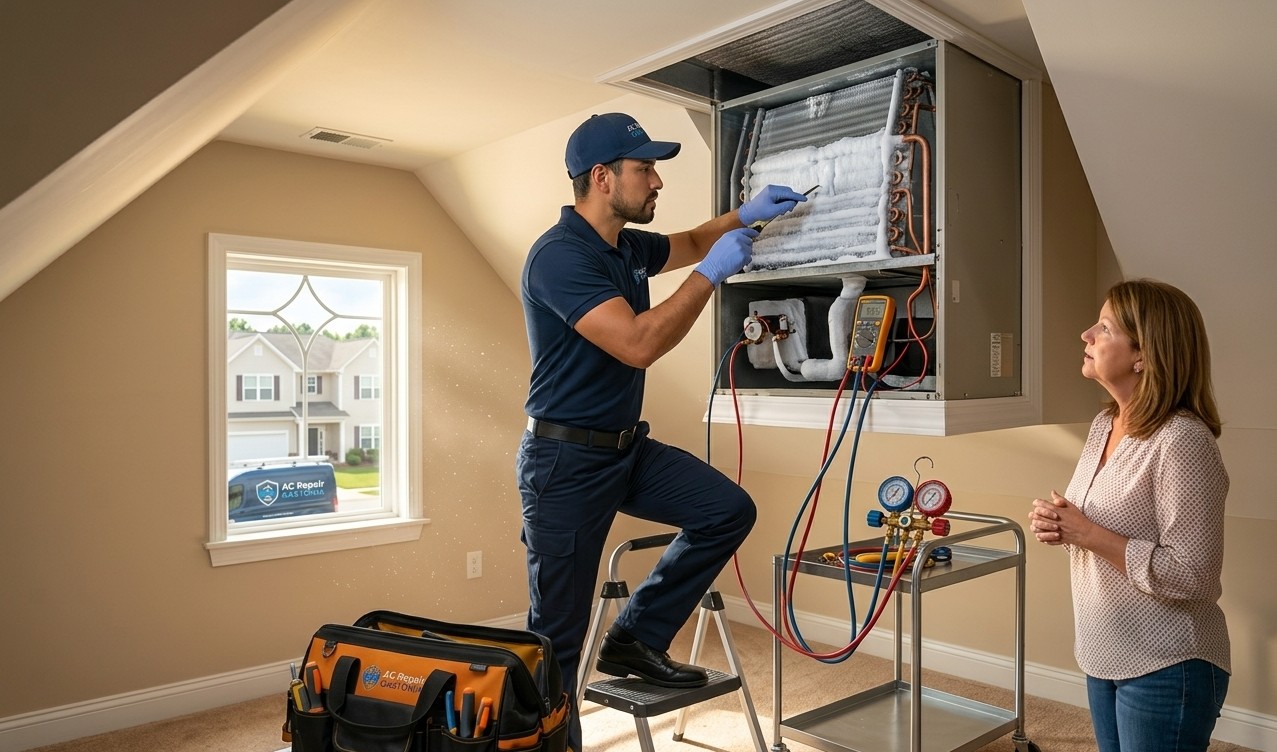
A frozen evaporator coil blocks airflow, stops cooling, and — if the system keeps running — risks sending liquid refrigerant back to the compressor. Ice buildup on AC coils is a diagnosable problem with a specific cause that Gastonia AC Repair identifies on the first visit, before recommending any repair or component work.
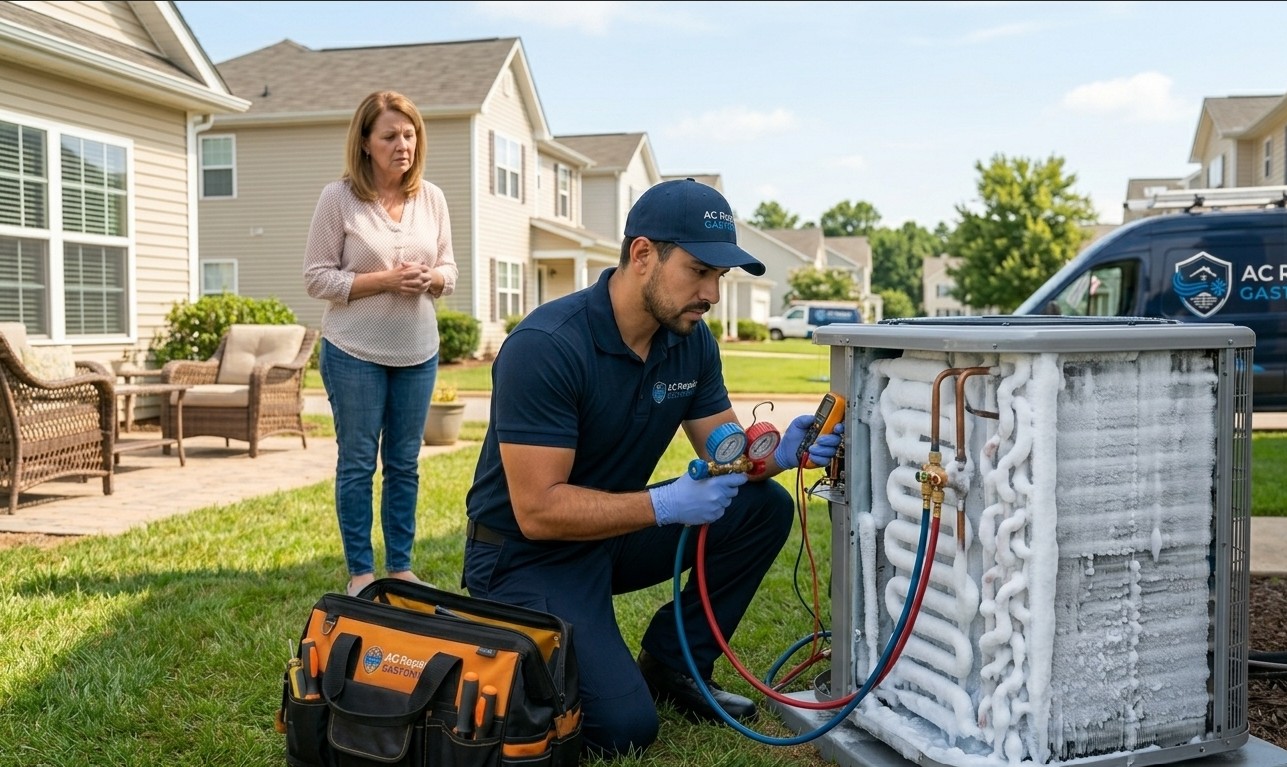
Turn off cooling — run fan only
Frozen AC Coil Symptoms
Gastonia Homeowners Should Know
When a frozen AC coil develops inside your system, it quietly disrupts the entire cooling process — often before most homeowners realize anything is wrong. Gastonia AC Repair fields these calls throughout the cooling season, and the pattern is consistent: the earliest signs tend to be subtle — weaker airflow, rooms that stay warmer than expected — well before ice becomes visible or the system shuts down entirely.
Unlike some AC problems that announce themselves with unusual sounds or obvious failure, frozen coils tend to develop gradually. The evaporator coil — responsible for absorbing heat from indoor air — becomes coated in ice, which blocks airflow and steadily reduces how much cooling reaches your living spaces. By the time the issue is noticeable, the restriction is usually already significant. Catching it early makes the resolution considerably simpler.
Noticeably Weaker Airflow From the Vents
Ice buildup on the evaporator coil acts as a physical barrier — restricting the volume of air the system can move through the ductwork. Vents that once delivered strong, consistent airflow now feel sluggish, and some rooms may feel almost completely cut off from cooling. This reduced airflow is often the first thing homeowners notice, even before warm air becomes obvious.
Rooms Staying Warmer Than the Thermostat Setting
When the coil is partially or fully frozen, the system loses its ability to effectively absorb heat from indoor air. The result is a home that runs progressively warmer despite the thermostat calling for cool temperatures. During Gastonia's hotter summer months, this gap between the set temperature and actual indoor comfort becomes increasingly difficult to ignore — and tends to widen as the ice accumulation grows.
System Running Continuously Without Reaching Comfort
A frozen coil forces the system to run longer cycles in an attempt to compensate for reduced cooling output. The system keeps running — and your energy bill keeps climbing — but indoor temperatures remain stubbornly high. Extended runtime without results is a reliable signal that something is restricting the system's ability to cool properly, and frozen coils are one of the most common explanations.
When To Schedule
AC Repair
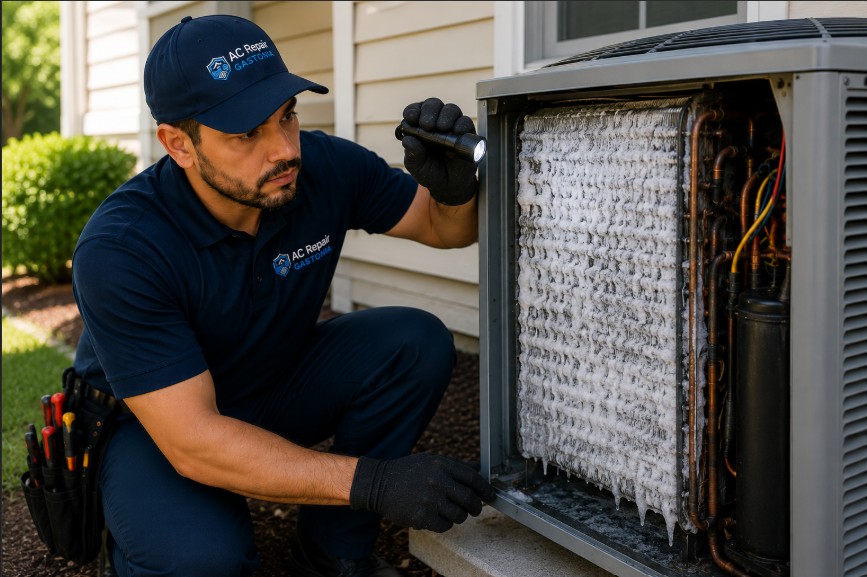
Frozen coils rarely fix themselves. Once ice builds up on the evaporator coil, it continues to accumulate until airflow stops almost entirely — at which point the system is cooling nothing, running continuously, and driving up your energy bill. The signals that precede a full freeze are worth acting on before the situation reaches that point.
Airflow From Vents Has Become Noticeably Weaker
A gradual decline in airflow — vents that once felt strong now feel sluggish or barely moving — is one of the earliest and most consistent indicators of a developing coil freeze. At this stage, the restriction is already present but the system hasn't fully shut down yet. This is the most practical window to schedule a diagnostic: catching it here typically means a simpler resolution than waiting for complete cooling failure.
Ice Buildup Keeps Returning After the System Thaws
A coil that freezes, thaws, and then freezes again is telling you that the underlying cause hasn't been addressed. Recurring freeze cycles place significant strain on the compressor and other components — and the intervals between freezes tend to shorten over time. Repeated freezing is a clear signal of an underlying issue — often a low refrigerant charge from a leak or persistent airflow restriction — that needs proper diagnosis rather than repeated thaw cycles. If refrigerant levels are involved, the source needs to be found and sealed, not just topped off.
Cooling Performance Declines As Outdoor Temperatures Rise
A system that keeps up adequately on a mild day but falls noticeably short when Gastonia temperatures push into the 90s is already operating at the edge of its capacity. Heat demand accelerates coil freeze progression — the harder the system works to compensate for reduced airflow, the faster ice accumulates. If your home is consistently warmer than it should be during the hottest part of the day, that's the window to schedule before the problem compounds further.
The System Is Running But Producing No Meaningful Cooling
When the AC is on and running — but indoor temperatures stay as warm as if it were off — the coil is likely fully frozen and airflow has been blocked to the point of producing no useful cooling. At this stage, the system needs to be shut off to allow the coil to thaw fully before a diagnostic can be completed. This is the point where waiting is no longer an option. Same-day emergency AC repair is available across Gaston County — most calls placed before noon are scheduled the same day.